
Written by the Nail Health Guide Editorial Team Reviewed under the editorial direction of Laura Collins, Editorial Lead. Content is based on nail health research, ingredient analysis, publicly available dermatology references, and real-world user experiences.
Toenail fungus doesn’t always look the way most people expect. It doesn’t start as a thick, crumbly, yellow nail. It starts small — a tiny white spot, a slightly dull patch, a nail tip that looks a little off.
Most people miss it at first. By the time it’s obvious, the infection has already been growing for months.
This guide shows you exactly what to look for — from the very first signs to the advanced stages — so you can catch it early and act fast.
Toenail Fungus Pictures by Stage
Here’s a quick visual reference before we go into detail below.
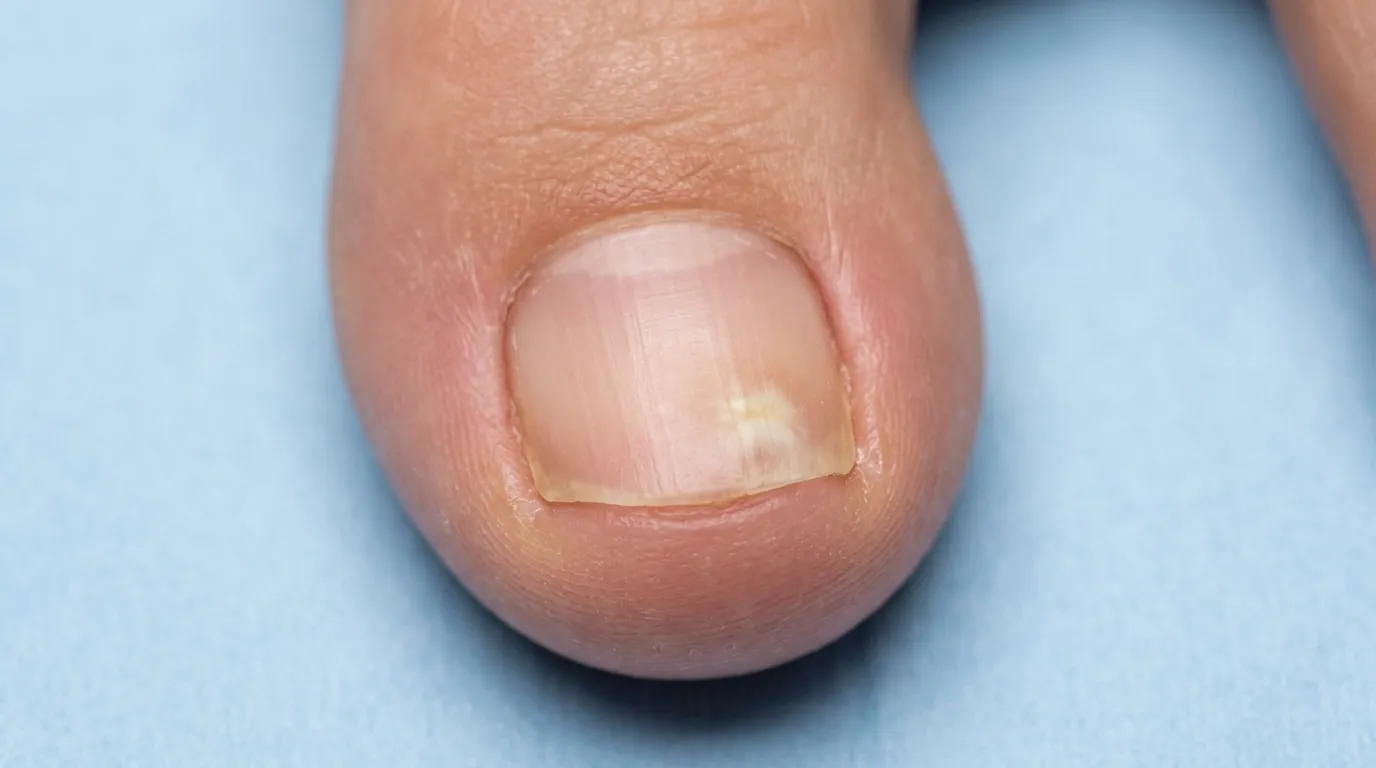
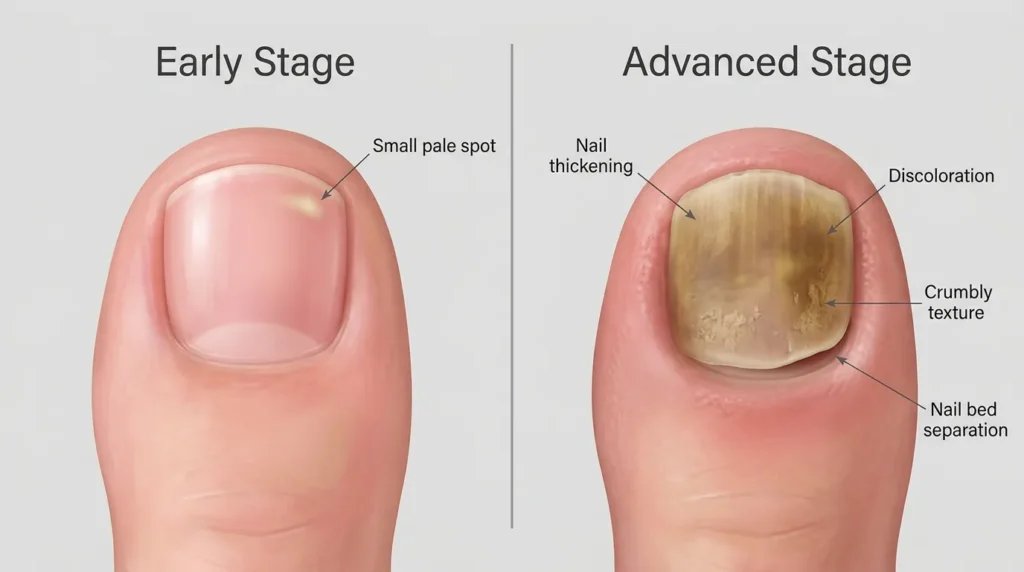
Early Stage: A small white or pale spot near the nail tip, minimal texture change.
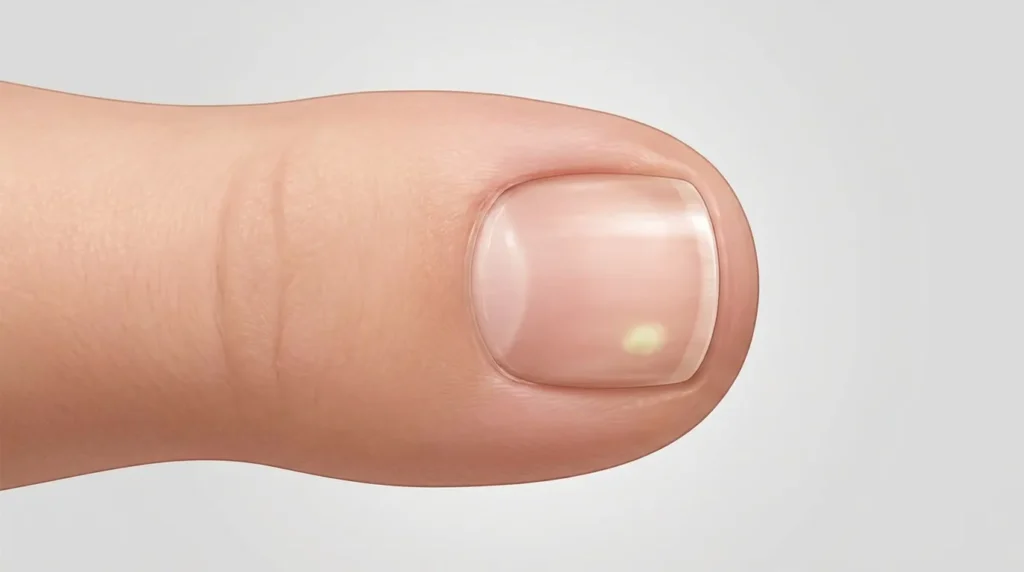
White Type: Powdery, chalky white patches sitting on top of the nail surface.
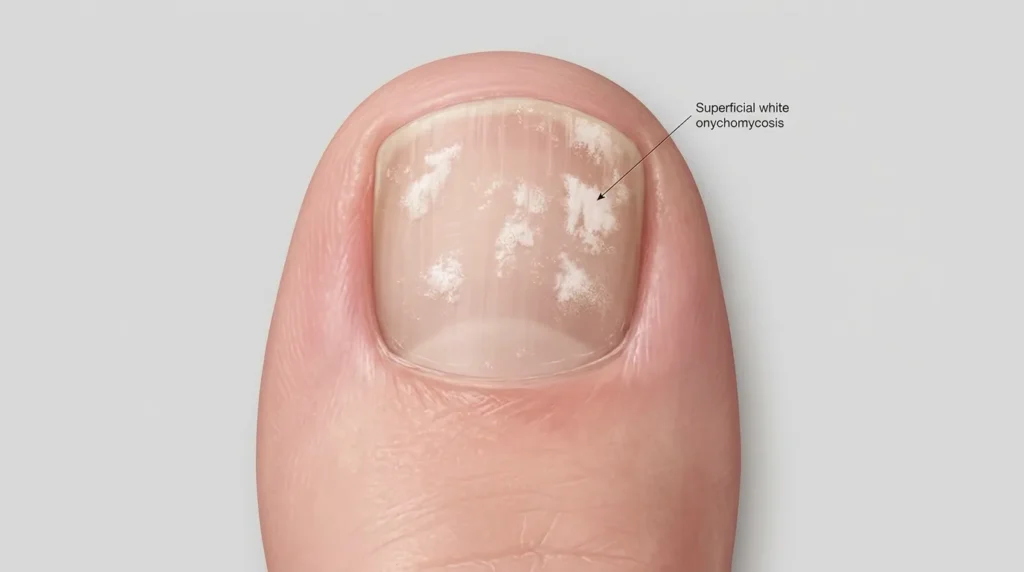
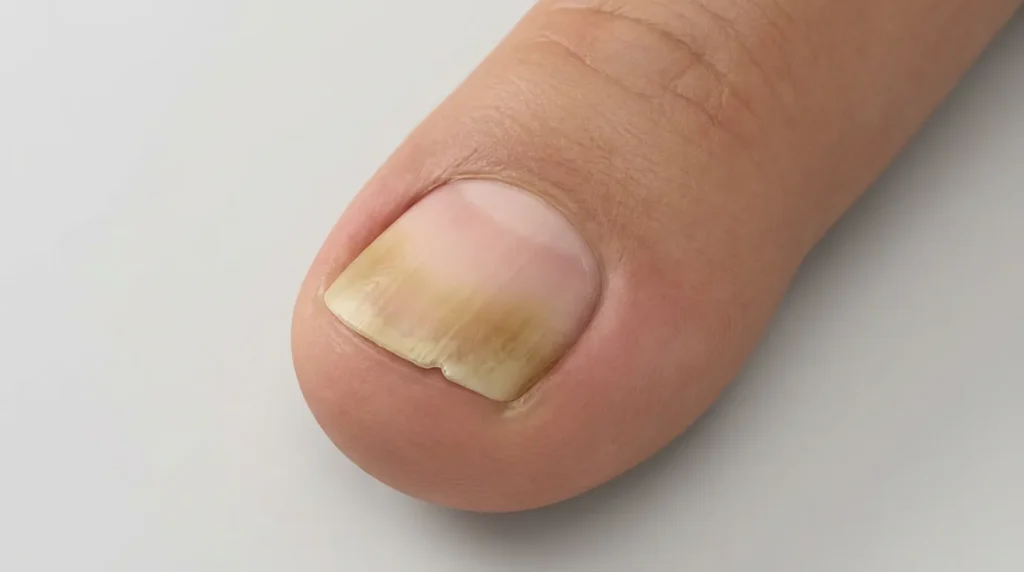
Yellow Type (Most Common): Yellow-brown discoloration starting at the tip and spreading toward the base.
Early vs Advanced: Side-by-side comparison showing how the infection progresses if untreated.
🤖 Note on Images
These images are AI-generated illustrations created to help you visualize the general appearance of each stage — they are not photos of real patients. Every case looks slightly different, and a healthcare provider can give you an accurate diagnosis for your specific situation.
What Does Toenail Fungus Look Like at First?
In the beginning, toenail fungus is easy to mistake for nothing.
Early signs to look for:
- A small white or pale yellow spot near the tip or edge of the nail
- One area of the nail looks duller than the rest
- A slightly rough patch when you run your finger across the nail
- The nail looks a little cloudy or milky in one spot
(See Image 1 above for a visual reference of this stage.)
At this stage there’s no pain, no smell, and the nail still looks mostly normal. That’s exactly why people ignore it.
⚠️ Important Note
The key question to ask yourself: has this spot been there for more than 4–6 weeks without going away? If yes — it’s worth treating. Nail polish staining and bruises grow out. Fungus doesn’t.
👉 Wondering if it’ll clear up without treatment? Here’s the honest answer.
What Does It Look Like as It Gets Worse?
If the infection isn’t treated, it slowly spreads and gets deeper into the nail.
Stage 2 signs:
- Yellow or brown color spreading from the tip inward
- The nail getting noticeably thicker
- Edges looking rough, jagged, or uneven
- The nail starting to lift slightly away from the skin underneath
At this stage it still doesn’t hurt — but it’s harder to treat than early on.
Stage 3 signs (advanced):
- Dark yellow, brown, or even black color across most of the nail
- Nail becomes thick, crumbly, and brittle
- The nail separates from the nail bed
- A mild unpleasant smell
- Some pain when wearing shoes
👉 Want to know exactly what stage you’re at? Toenail Fungus Stages: How to Tell If It’s Early, Progressing, or Already Advanced
The Two Most Common Types — and How They Look Different
White Toenail Fungus
This type starts on the surface of the nail — not underneath it.
What it looks like:
- Powdery or chalky white patches on the top of the nail
- The white material flakes off when you file it
- The nail surface feels rough and dry
(See Image 2 above for a visual reference of this type.)
This is actually easier to treat than the yellow type because the fungus hasn’t gone deep yet.
👉 White Toenail Fungus: Causes, Early Signs & What to Do
Some people see a more extreme version — chalky, crumbling white nails that look almost dusty.
👉 White Chalky Toenail Fungus: Why It Happens and How to Treat It
Yellow Toenail Fungus (Most Common)
This type starts under the tip of the nail and works inward.
What it looks like:
- Yellow or cloudy discoloration starting at the nail tip
- Spreads toward the base over time
- Nail gradually thickens and becomes brittle
(See Image 3 above for a visual reference of this type.)
This is the most common type — and what most people picture when they think of toenail fungus.
Comparison Table: Early vs Advanced
(See Image 4 above for a visual side-by-side comparison.)
| Early (Stage 1) | Advanced (Stage 3) | |
|---|---|---|
| Color | Small white or yellow spot | Dark yellow, brown, or black |
| Thickness | Normal | Very thick |
| Texture | Mostly smooth | Crumbly, brittle |
| Pain | None | Sometimes |
| Smell | None | Sometimes |
| Nail lifting | None | Yes |
| Treatment difficulty | Easy | Hard |
| Recovery time | A few months | Up to 18 months |
✅ Key Takeaway
The earlier you catch it, the easier it is to treat. That’s the single most important takeaway from this table — recovery time can be the difference between a few months and a year and a half.
👉 Early vs Advanced Toenail Fungus: How to Tell the Difference
Is It Fungus or Something Else?
Not every nail change is fungus. Here’s how to tell the difference from the most common lookalikes.
Fungus vs Nail Damage (Bruise or Injury)
Got a dark spot after dropping something on your foot or wearing tight shoes? That’s probably just a bruise under the nail.
How to tell:
- A bruise moves toward the tip as the nail grows — fungus doesn’t
- A bruise stays the same size or gets smaller — fungus spreads
- A bruise usually has a dark red or purple tint — fungus is more yellow or white
👉 Toenail Fungus vs Nail Damage: How to Tell the Difference
Fungus vs Nail Psoriasis
Nail psoriasis can look a lot like nail fungus. The main difference is that psoriasis often creates tiny dents (pits) on the nail surface — fungus usually doesn’t.
👉 Toenail Fungus vs Nail Psoriasis: How to Tell the Difference
Fungus vs Nail Polish Staining
Dark nail polish can leave a yellow tint on nails after removal.
How to tell:
- Remove all polish and go bare for 4 weeks
- If the yellow fades — it was staining
- If it stays or spreads — it’s more likely fungus
Does Toenail Fungus Smell?
Sometimes — but not always.
Early fungus has no smell. The smell develops later, as the infection gets worse and debris builds up under the nail. It’s usually described as musty, cheesy, or sour.
If your nail has a smell when you clip it or take your shoes off — that’s a sign the infection has moved past the early stage.
👉 Does Toenail Fungus Smell? What It Means
What If Only One Nail Is Affected?
That’s actually how most infections start — in just one nail.
🔍 Quick Fact
Having only one affected nail doesn’t mean it’s minor — it usually means you’re catching it early, which is the best possible time to act.
Left untreated, it will spread to other nails.
👉 Toenail Fungus in One Nail: Causes, Risks & What to Do
When Should You Start Treatment?
SStart treatment if you notice any of these:
- A spot that doesn’t grow out after 4–6 weeks
- Discoloration that’s slowly getting bigger
- The nail getting thicker or more brittle
- The same changes starting on a neighboring nail
The earlier you start, the faster and easier treatment works.
🦶 Ready to Start Treating It?
See our side-by-side comparison of the top 5 natural toenail fungus treatments in 2026 — honest rankings based on ingredients, not hype.
Compare the Top 5 Treatments →👉 How to Treat Toenail Fungus at Home: What Really Works
FAQ — What Does Toenail Fungus Look Like?
What color is toenail fungus? Usually white or pale yellow in the early stages. It gets darker — yellow, brown, or black — as it gets worse.
Does toenail fungus hurt? Not usually in the early stages. Pain can develop later when the nail thickens and presses against your shoe.
Can toenail fungus look like a white spot? Yes — a small white powdery patch is one of the earliest signs. If it’s rough to the touch and doesn’t go away, get it checked.
Can one small spot really be fungus? Yes. Most infections start as one small spot that most people ignore. That spot slowly grows and spreads over weeks and months.
How do I know if treatment is working? Look for a thin line of clear, healthy nail growing at the base of the nail (near the cuticle). That’s the sign the fungus is clearing and new nail is coming in.
Are the pictures in this article real patient photos? No — the images in this guide are AI-generated illustrations created to help visualize each stage. They’re meant as a general educational reference, not an exact diagnostic match. If you’re unsure about your own nail, a doctor or podiatrist can give you an accurate diagnosis.
Final Thoughts
Toenail fungus starts small and quiet. No pain, no obvious changes — just a small spot that seems harmless.
But it grows. And the longer you wait, the harder it is to treat.
If something about your nail looks off and it’s been that way for more than a month — don’t ignore it. Compare it to the signs in this guide. If it matches, start treatment now.
The good news: caught early, toenail fungus is very treatable at home.
👉 How to Treat Toenail Fungus at Home: What Really Works
Reviewed by Laura Collins — Editorial Lead at Nail Health Guide. Learn more about Laura Collins
⚠️ Medical Disclaimer
This content is for informational purposes only and is not intended as medical advice. Images used in this article are AI-generated illustrations for educational purposes and do not depict real patients. Always consult a healthcare professional for diagnosis and treatment.