

Written by the Nail Health Guide Editorial Team Reviewed under the editorial direction of Laura Collins, Editorial Lead. Content is based on nail health research and publicly available dermatology references.
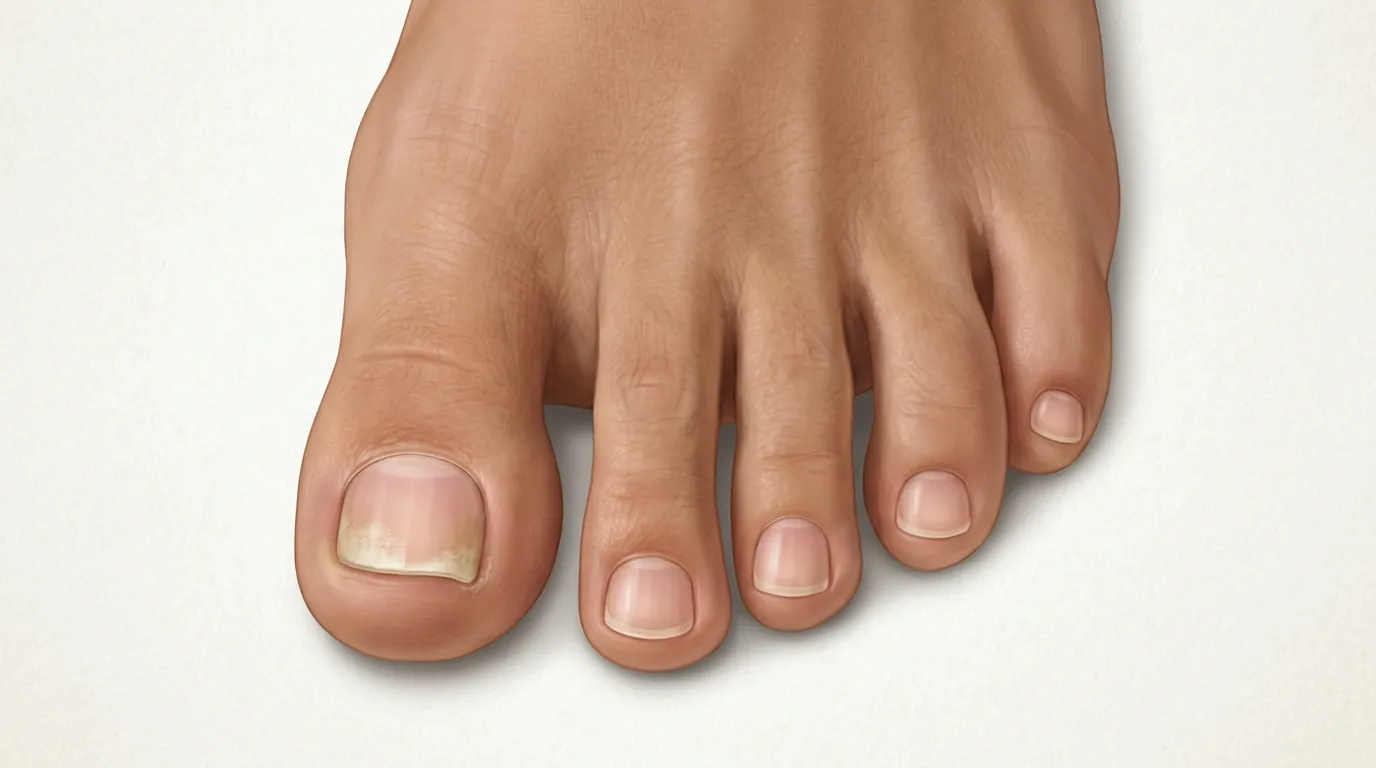
Finding toenail fungus in only one nail is actually the most common way the infection starts. Most people assume that if it were really fungus, more nails would be affected. That assumption leads to months of waiting — which is exactly the time the infection needs to spread.
A single infected nail is not a minor problem. It’s the early window — the point where treatment is simplest, fastest, and most effective. And it’s the point where doing nothing has the highest cost.
This guide covers why toenail fungus starts in one nail, what the risks are, how to tell if it’s actually fungus, and what to do about it.
Why Does Toenail Fungus Start in One Nail?
Toenail fungus doesn’t appear in multiple nails simultaneously — it begins in one nail and spreads from there. Understanding why it starts where it does helps with both identification and prevention.
The big toenail is the most common starting point because it:
- Takes the most pressure from shoes — especially during walking and running
- Has the most surface area exposed to contaminated floors
- Is most often exposed in environments where fungal spores are present
How it enters a single nail: Fungal spores are opportunistic — they need a point of entry. Common entry points in a single nail include:
- Microscopic cracks at the nail tip or edges from pressure or dryness
- A small gap between the nail and nail bed from minor trauma
- The nail surface itself in cases of white superficial onychomycosis
- Damaged cuticle or nail fold skin adjacent to the nail
Once established in one nail, the fungus grows steadily. Without treatment, it eventually spreads to neighboring nails through shared footwear, socks, nail tools, and direct contact.
Is It Really Fungus If Only One Nail Is Affected?
Yes — one nail is the most common presentation of early toenail fungus. Having only one affected nail doesn’t make fungus less likely. It makes it more likely that you’re catching it early.
That said, other conditions can cause changes in a single nail that look like fungus:
Nail trauma: A dark spot or discoloration after an impact or pressure from tight shoes. Unlike fungus, traumatic changes move toward the nail tip as the nail grows and don’t spread to other nails.
Nail psoriasis: Can affect individual nails, often with characteristic pitting on the nail surface and a yellowish oil-drop discoloration. Usually accompanied by skin psoriasis elsewhere.
Melanonychia: A dark streak running from the base to the tip of the nail — caused by increased melanin production. Can look alarming but is usually benign. Worth a medical evaluation.
Subungual melanoma: Rare but important to rule out — a dark streak or spot under the nail that doesn’t improve. If you have a dark streak under a single nail that’s been there for months without change, see a dermatologist.
👉 For visual comparison of fungus vs other nail conditions: What Does Toenail Fungus Look Like? Pictures & Early Signs
Signs That a Single Nail Has Fungus
Early signs (Stage 1):
- Small white spot on the nail surface — powdery or chalky texture
- Pale yellow discoloration at the nail tip
- Slight dullness or loss of shine in one area
- Rough texture when running a finger across the nail
- The change doesn’t grow out with the nail after 4–6 weeks
Moderate signs (Stage 2):
- Yellow or brown discoloration spreading inward from the tip
- Nail thickening — especially at the edges
- Brittle or crumbly texture developing
- Nail beginning to lift slightly at the tip
- Debris accumulating under the nail
Advanced signs (Stage 3):
- Dark discoloration across most of the nail
- Significant thickening — 2–3x normal
- Nail separating from the nail bed
- Possible mild odor
- Neighboring nails beginning to show early signs
👉 Full visual and symptom breakdown by stage: Toenail Fungus Stages: How to Tell If It’s Early, Progressing, or Already Advanced
Risks of Leaving One Nail Untreated
The most important thing to understand about single-nail fungal infection is that it doesn’t stay that way. Without treatment, the progression is predictable:
Stage 1 → Stage 2 → Stage 3: The fungus continues to penetrate deeper into the nail structure. The nail becomes progressively more damaged — thickening, crumbling, discoloring. Recovery at Stage 3 takes 6–18 months compared to weeks at Stage 1.
Spread to neighboring nails: Fungal spores shed from the infected nail contaminate socks and shoes daily. Neighboring nails — especially those in close contact with the infected nail — are constantly exposed. Most people who start with one infected nail develop a second within months if untreated.
👉 How spreading happens and how to stop it: Why Toenail Fungus Keeps Spreading to Other Nails
Spread to skin: The fungus can travel from the nail to the surrounding skin, causing athlete’s foot — or vice versa. Athlete’s foot and toenail fungus frequently co-exist and re-infect each other if both aren’t addressed.
Spread to other people: Toenail fungus is contagious. Fungal spores from a single infected nail can contaminate shared surfaces — shower floors, bath mats, communal gym areas — where others can pick them up.
👉 Full guide to contagion: Is Toenail Fungus Contagious? How It Spreads & How to Protect Yourself
Why Only One Nail? Common Causes
Localized trauma: The most common reason one specific nail is infected while others aren’t is localized trauma to that nail — a stubbed toe, tight shoes pressing on the big toenail, or repeated pressure from running. The physical damage creates an entry point that wasn’t present in other nails.
Shoe pressure pattern: Shoes that fit poorly in one specific area can cause repeated microtrauma to one nail. Runners frequently develop fungus in the big toenail on the side of the dominant foot — which takes more pressure during push-off.
Previous nail damage: A nail that was previously injured — dropped something on it, torn partially, or damaged by chemicals — is more vulnerable to fungal colonization long after the original injury heals.
Entry from athlete’s foot: Athlete’s foot (tinea pedis) affecting one foot can spread to the nail on that foot preferentially. The fungus travels from the skin to the nail at the point of closest contact — usually the big toenail.
Compromised local circulation: Poor circulation in one foot (common in diabetes or peripheral vascular disease) can make nails on that foot more vulnerable while the other foot remains healthy.
What to Do When Only One Nail Is Affected
Having only one nail affected is the best possible situation — it means you’re likely catching the infection early. Here’s what to do:
Step 1: Confirm It’s Fungus
Before treating, rule out the most common non-fungal causes:
- Go nail-polish-free for 4 weeks — if it clears, it was staining
- Track the discoloration monthly — if it moves toward the tip with the nail, it’s likely trauma
- If it persists, spreads, or develops texture changes — treat as fungal
Step 2: Prepare and Treat the Nail
- Trim the nail as short as comfortably possible
- File the nail surface gently to thin any thickening and improve penetration
- Apply topical antifungal twice daily — morning and night
- Apply to the nail surface, edges, and under the nail tip
At Stage 1, topical antifungal treatment is highly effective. The fungus is still accessible near the nail surface — before it penetrates to the nail bed.
A mist spray format like ProNail Complex can make this twice-daily step quicker and easier to stay consistent with, since consistency matters more than the specific product at this stage.
Step 3: Protect the Other Nails
With one nail infected, preventing spread to neighboring nails is critical:
- Use separate nail clippers for the infected nail — disinfect with rubbing alcohol after each use
- Disinfect your shoes with antifungal spray weekly
- Change socks daily and wash in hot water
- Wear footwear in communal areas — gym showers, pool areas
- Check neighboring nails monthly for early signs
Step 4: Address Any Contributing Factors
- If the nail was damaged by tight shoes, check footwear fit
- If athlete’s foot is present, treat it simultaneously — otherwise reinfection is common
- If the nail was previously injured, apply antifungal preventatively to neighboring nails
👉 Full treatment protocol: How to Treat Toenail Fungus at Home: What Really Works
How Long Does Treatment Take for One Nail?
Treatment timeline depends on which stage the infection is at when you start:
| Stage When Treatment Starts | Visible Improvement | Full Nail Regrowth |
|---|---|---|
| Stage 1 (early) | 6–8 weeks | 6–9 months |
| Stage 2 (moderate) | 3–4 months | 9–12 months |
| Stage 3 (advanced) | 4–6 months | 12–18 months |
The infected nail doesn’t transform — it grows out. New, clear nail appears at the base and slowly advances as the infected nail moves toward the tip. For a big toenail, full regrowth takes 9–12 months even after the infection is cleared.
When to See a Doctor
See a dermatologist or podiatrist if:
- You’re not certain the nail change is fungal — especially if there’s a dark streak under the nail
- The infection doesn’t respond to 3 months of consistent topical treatment
- The nail is causing significant pain, lifting, or showing signs of secondary infection
- You have diabetes, poor circulation, or a weakened immune system — nail infections carry higher risk in these populations
- The infection has already spread to a second nail despite treatment
FAQ — Toenail Fungus in One Nail
Is it normal to have toenail fungus in just one nail? Yes — one nail is the most common starting point. Most fungal nail infections begin in a single nail and spread from there if untreated. Having only one nail affected usually means you’re catching it early.
Will it spread to other nails if I don’t treat it? Very likely, yes. Fungal spores shed from the infected nail contaminate socks, shoes, and nail tools daily. Most untreated single-nail infections spread to at least one neighboring nail within months.
Can I treat just the one nail without worrying about the others? Focus your treatment on the infected nail, but take preventive steps with neighboring nails — check them monthly, use separate nail tools, and disinfect footwear. If you spot early signs on a second nail, start treatment there immediately.
My big toenail has been discolored for months but it’s still just one nail — is it definitely fungus? Not necessarily. If the discoloration has been present for many months without spreading, it could be trauma that’s growing out slowly, or another non-fungal condition. If the nail texture is normal and the discoloration is moving toward the tip — monitor it. If there’s thickening, crumbling, or the discoloration isn’t moving — fungus is more likely.
Can one infected nail clear up on its own? Rarely. Very mild, surface-level infections occasionally stabilize with aggressive hygiene. Most cases continue to progress and spread without antifungal treatment.
Final Thoughts
One infected nail is not a small problem to ignore — it’s an early-stage infection in the best possible window for treatment. The fungus is accessible, the nail damage is minimal, and topical treatment is highly effective.
The cost of waiting is measured in months. A Stage 1 infection caught now can clear in 6–9 months. The same infection ignored for a year can take 18 months to clear after you finally start — plus the risk of having spread to several other nails by then.
Start treatment now, protect the neighboring nails, and check progress monthly.
👉 See what the infection looks like at each stage: What Does Toenail Fungus Look Like? Pictures & Early Signs
👉 Start your home treatment plan: How to Treat Toenail Fungus at Home: What Really Works
Reviewed by Laura Collins — Editor & Lead Content Researcher at Nail Health Guide. Learn more about Laura Collins
⚠️ Medical Disclaimer: This content is for informational purposes only and is not intended as medical advice. Always consult a qualified healthcare professional for diagnosis and treatment guidance.