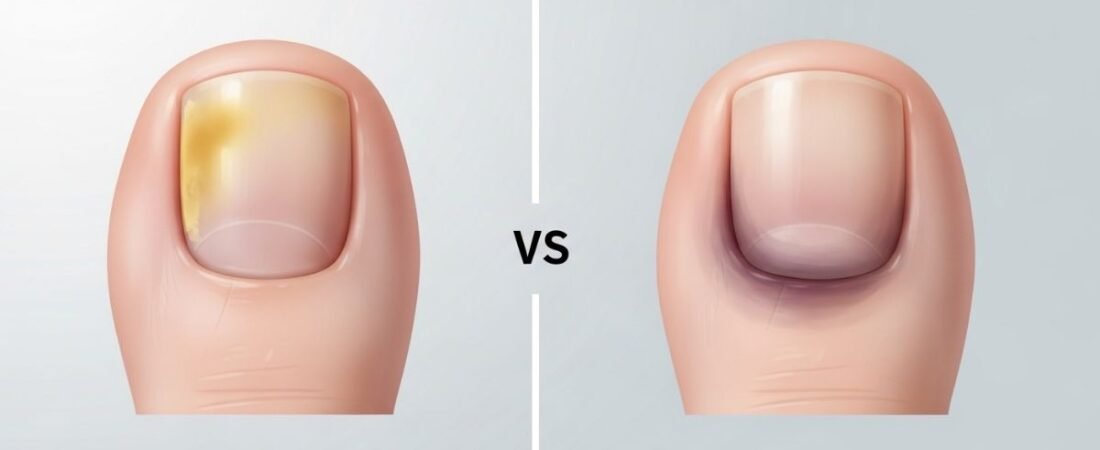
Changes in a toenail can be alarming — discoloration, thickening, lifting, or brittleness often make people assume the worst. But here’s the problem: toenail fungus and nail trauma look very similar, and confusing the two leads to wrong treatments and wasted time.
This guide explains how to tell the difference between toenail fungus and trauma-related nail damage, using clear signs, timelines, and practical clues so you can take the right next step.
Why Toenail Fungus and Nail Trauma Are Often Confused
Both conditions affect the nail plate and can cause:
- Yellow or white discoloration
- Thickened or brittle nails
- Nail lifting (onycholysis)
- Surface roughness or crumbling
The key difference is what caused the damage — and how it behaves over time.
What Is Toenail Fungus?
Toenail fungus (onychomycosis) is caused by fungal organisms that invade the nail bed and feed on keratin.
Typical Causes
- Moist, sweaty shoes
- Public showers or gyms
- Nail injuries that allow fungus to enter
- Poor nail hygiene
👉 If you’re unsure how fungus usually begins and progresses, see:
Toenail Fungus Stages: How to Tell If It’s Early, Progressing, or Already Advanced
Common Signs of Toenail Fungus
- Yellow, white, or brown discoloration
- Gradual thickening over weeks or months
- Brittle or crumbly nail edges
- Chalky debris under the nail
- Slow but progressive worsening
📌 Fungus rarely improves on its own and often spreads to other nails.
👉 Related:
Toenail Fungus in One Nail: Causes, Risks, and What to Do
What Is Trauma Nail Damage?
Trauma-related nail damage occurs when the nail is injured — often repeatedly.
Common Trauma Triggers
- Tight shoes
- Long-distance running
- Sports impact
- Dropping something on the toe
Common Signs of Nail Trauma
- Sudden discoloration after impact
- Dark red, purple, or black bruising
- Nail lifting shortly after injury
- Damage usually limited to one nail
📌 Trauma damage often improves as the nail grows out, once pressure stops.
👉 See how footwear and pressure can worsen nail issues:
What Worsens Toenail Fungus? Habits and Factors That Make It Worse
Key Differences at a Glance
Color Changes
- Fungus: yellow, white, brown, chalky
- Trauma: dark red, purple, bruised
Progression
- Fungus: slowly worsens
- Trauma: sudden, then stabilizes
Spread
- Fungus: may spread to nearby nails
- Trauma: usually stays in one nail
When Trauma Turns Into Fungus (Very Common)
This is where many people get confused:
👉 Trauma can open the door for fungus.
Micro-tears or nail lifting allow fungal organisms to enter — which explains why some people notice fungus weeks after an injury.
This overlap is common in:
- Runners
- Athletes
- People wearing tight shoes
- Acrylic or gel nail users
👉 Related damage pattern:
Toenail Fungus After Acrylic Nails: Causes, Early Signs & What to Do
How to Tell What You’re Dealing With
Ask yourself:
- ✔ Did it appear suddenly after pressure or impact? → trauma
- ✔ Is the nail slowly thickening and yellowing? → fungus
- ✔ Is there chalky debris under the nail? → fungus
- ✔ Has it spread to another nail? → fungus
👉 Visual reference helps a lot here:
What Does Toenail Fungus Look Like? (Pictures & Early Signs)
What to Do If It’s Trauma
- Reduce pressure (better footwear)
- Keep nails trimmed
- Avoid acrylics or polish
- Allow time for regrowth
Most trauma nails improve naturally.
What to Do If It’s Toenail Fungus
Toenail fungus needs active treatment.
Options include:
- Nail hygiene
- Moisture control
- Targeted topical antifungal solutions
👉 Step-by-step guidance:
How to Treat Toenail Fungus at Home: Fast Remedies That Actually Work
When to See a Doctor
Consult a professional if:
- Pain increases
- Nail becomes severely thick or distorted
- Multiple nails are involved
- You have diabetes or circulation issues
👉 Also see:
Can Toenail Fungus Go Away on Its Own? Doctors Explain the Truth
Final Thoughts
Toenail fungus and trauma nail damage can look almost identical — but their behavior over time reveals the truth.
Trauma stabilizes. Fungus progresses.
Early identification helps you:
✔ avoid wrong treatments
✔ stop fungus before it spreads
✔ protect long-term nail health
Changes in