
Most people focus on what to do for toenail fungus. But what you’re doing wrong can matter just as much.
Some everyday habits silently make the infection worse — and most people have no idea they’re doing them. If your treatment isn’t working as well as you expected, one of these is probably why.
1. Wearing the Same Shoes Every Day
This is the number one reason treatment fails — and the most overlooked.
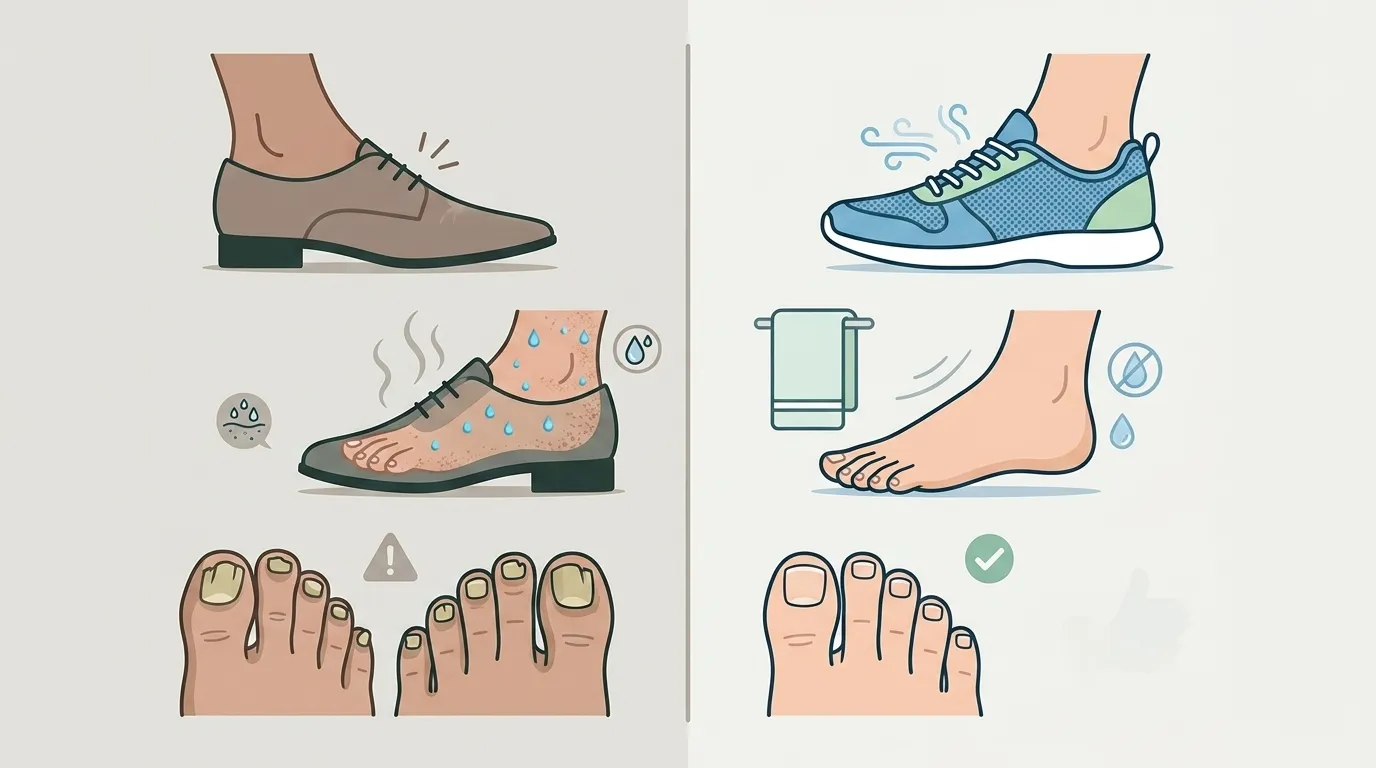
Fungal spores shed from your infected nail every time you wear shoes. Those spores live inside the shoe for weeks or even months. Every time you put on the same shoes without treating them, you’re reintroducing the fungus right back onto your nail.
What to do instead:
- Keep treating until the entire infected nail has grown out
- For a big toenail, that means continuing treatment for 9–12 months
- The nail needs to look completely clear before you stop
A quick, low-friction routine helps consistency over many months — a mist spray format like ProNail Complex can make the twice-daily habit easier to stick with over the long haul.
👉 Toenail Fungus and Shoes: How to Clean & Prevent Reinfection
2. Keeping Nails Long
Long toenails trap moisture and debris underneath them — exactly what the fungus needs to grow. They also make it harder for treatment to reach the infection.
What to do instead:
- Trim your nails as short as comfortably possible
- Cut straight across — not curved
- File the nail surface lightly before applying any treatment
- Trim regularly — don’t let them grow back out during treatment
3. Wearing Tight or Non-Breathable Shoes
Synthetic shoes that don’t allow airflow create a warm, moist environment inside — perfect conditions for fungal growth. Tight shoes also cause micro-damage to the nail from repeated pressure, which gives the fungus more points of entry.
What to do instead:
- Choose breathable materials — mesh, leather, or canvas
- Make sure there’s a thumb’s width of space at the toe box
- Avoid wearing the same pair two days in a row
- Use moisture-wicking socks instead of cotton
4. Not Drying Feet Properly
Fungi thrive in moisture. If you rush out of the shower without drying your feet completely — especially between your toes — you’re creating ideal conditions for the fungus to spread and grow.
What to do instead:
- Take 30 extra seconds to dry between every toe after showering
- Use a clean, dry towel — not one that’s been sitting damp
- If your feet sweat a lot, use antifungal foot powder inside your shoes and socks
5. Stopping Treatment Too Early
The nail looks better — so you stop treating. This is one of the most common mistakes people make.
Looking better and being cleared are not the same thing. When you see improvement, what you’re seeing is new healthy nail growing in at the base. The infected nail is still there — still containing fungus. Stop treatment early and the infection quickly comes back and spreads.
What to do instead:
- Keep treating until the entire infected nail has grown out
- For a big toenail, that means continuing treatment for 9–12 months
- The nail needs to look completely clear before you stop
👉 Common Mistakes People Make When Treating Toenail Fungus
6. Wearing Nail Polish Over an Infected Nail
It’s tempting to cover up the discoloration with nail polish. But this makes things worse in two ways:
- Polish traps moisture under the nail — which the fungus loves
- It blocks antifungal treatment from penetrating the nail
What to do instead:
- Avoid nail polish on infected nails during treatment
- If you must use polish for a special occasion, remove it as soon as possible
- Never apply polish to an infected nail and then leave it on for weeks
7. Walking Barefoot in Public Areas
Gym showers, locker rooms, pool areas, and yoga studios are full of fungal spores left by other people. Walking barefoot in these places exposes your nails to constant reinfection — even while you’re treating.
What to do instead:
- Always wear flip-flops or waterproof sandals in public wet areas
- This applies even after you’ve cleared the infection — you can always catch it again
8. Ignoring Athlete’s Foot
Athlete’s foot is caused by the same family of fungi as toenail fungus. If you have fungus on your skin between your toes and don’t treat it, it will keep reinfecting your nails — making all your treatment efforts pointless.
What to do instead:
- Treat athlete’s foot at the same time as nail fungus
- Use an antifungal cream on the affected skin between your toes
- Keep treating the skin even after the nail fungus clears
9. Using the Same Nail Clippers on All Your Nails
When you clip an infected nail, fungal spores transfer to the clippers. If you then use those same clippers on a healthy nail, you’re spreading the infection yourself.
What to do instead:
- Keep a dedicated pair of clippers just for the infected nail
- Disinfect all nail tools with rubbing alcohol before and after each use
- Never share nail clippers with anyone else
10. A Weakened Immune System
This one isn’t a habit — but it’s an important factor. Your immune system plays a role in keeping fungal growth in check. Anything that weakens it can allow toenail fungus to progress faster and be harder to clear:
- Diabetes
- Poor circulation
- Long-term steroid use
- Autoimmune conditions
- Age (immune function naturally decreases with age)
What to do: If you have any of these conditions and your nail fungus isn’t responding to home treatment, see a doctor. You may need prescription treatment rather than OTC options.
Quick Summary: What Makes It Worse vs Better
| Makes It Worse | Makes It Better |
|---|---|
| Same shoes every day | Rotating shoes + antifungal spray |
| Long nails | Short, filed nails |
| Tight, synthetic shoes | Breathable footwear |
| Damp feet | Completely dry feet |
| Stopping treatment early | Treating for the full nail regrowth cycle |
| Nail polish over infection | No polish during treatment |
| Barefoot in public | Footwear in wet public areas |
| Untreated athlete’s foot | Treating skin and nail together |
| Shared nail clippers | Dedicated, disinfected clippers |
FAQ — What Worsens Toenail Fungus?
Can stress make toenail fungus worse? Chronic stress weakens the immune system, which can make it harder for your body to fight off fungal infections. It’s not a direct cause, but it can slow recovery.
Does sugar make toenail fungus worse? Fungi feed on sugar. A diet high in refined sugar and processed carbohydrates may support fungal growth. Reducing sugar intake won’t cure an infection — but it’s a supporting habit worth adopting.
Can swimming make toenail fungus worse? Pool environments are high-risk for fungal spread. Chlorine doesn’t fully eliminate fungal spores. Wearing waterproof footwear around pools and drying feet completely after swimming reduces this risk.
Does keeping feet warm make fungus worse? Warmth combined with moisture creates ideal conditions for fungal growth. Wearing thick, non-breathable socks and warm enclosed shoes all day is a contributing factor — especially in winter.
Can I make toenail fungus worse by touching it? Yes — if you touch the infected nail and then touch another nail without washing your hands, you can spread the infection. Always wash hands after handling an infected nail.
Final Thoughts
Treating toenail fungus is only half the battle. The other half is stopping the habits that make it worse.
The biggest culprits are simple: same shoes every day, keeping nails too long, not drying feet, and stopping treatment too early. Fix those — and your treatment will work significantly faster.
👉 How to Treat Toenail Fungus at Home: The Complete Protocol
👉 Common Mistakes When Treating Toenail Fungus
Reviewed by Laura Collins — Editorial Lead at Nail Health Guide. Learn more about Laura Collins
⚠️ Medical Disclaimer: This content is for informational purposes only. Always consult a healthcare professional for diagnosis and treatment.