Written by the Nail Health Guide Editorial Team | Updated September 2026 | 7 min read
Affiliate disclosure: This page contains affiliate links — we may earn a commission at no extra cost to you. Medical disclaimer: Not medical advice; consult your doctor before starting any new treatment.
Noticing changes in your toenails after wearing acrylic nails can be concerning — especially if you see discoloration, thickening, or chalky spots. While acrylic nails are popular for cosmetic reasons, they can sometimes create conditions that allow fungal infections to develop underneath the nail surface.
If you’ve recently removed acrylic or gel nails and noticed white spots, slight crumbling, or a dull texture, you’re not alone. Toenail fungus often starts subtly, and recognizing early signs can make home management far more effective.
This guide explains why toenail fungus can develop after acrylic nails, how to identify early warning signs, and what practical steps you can take to prevent it from worsening.
⚠️ Important Note
Acrylic nails don’t cause fungus directly — but they seal the natural nail off from air and create a warm, moist environment that makes an existing vulnerability much easier to exploit.
What Causes Toenail Fungus After Acrylic Nails?
Toenail fungus (onychomycosis) doesn’t appear overnight. Acrylic nails can increase risk due to several factors:
- Moisture trapped under the acrylic — sweat or water creates an ideal environment for fungal growth
- Micro-tears in the nail plate — filing, drilling, or aggressive removal weakens the nail’s protective barrier
- Contaminated salon tools — improperly sanitized instruments may introduce fungal spores
- Prolonged acrylic wear — nails are sealed off and can’t dry naturally
Dermatology experts note that fungi often enter through tiny cracks or weak spots in the nail, which makes post-acrylic nails more vulnerable if hygiene or aftercare is lacking.
🔍 Quick Fact
Nail salons that skip proper tool sterilization between clients are a well-documented transmission route for onychomycosis — it’s worth asking your salon about their sanitization process before your next fill.
How to Tell the Difference: Fungus vs. Normal Nail Damage From Acrylics
This is where a lot of people get confused, because acrylic removal itself can cause changes that look similar to early fungus but aren’t.
More likely mechanical damage (not fungus) if:
- The discoloration is a single uniform stain (not patchy or spreading)
- It appeared immediately after removal, not weeks later
- The nail surface is smooth, not rough or crumbly
- There’s no odor
More likely fungus if:
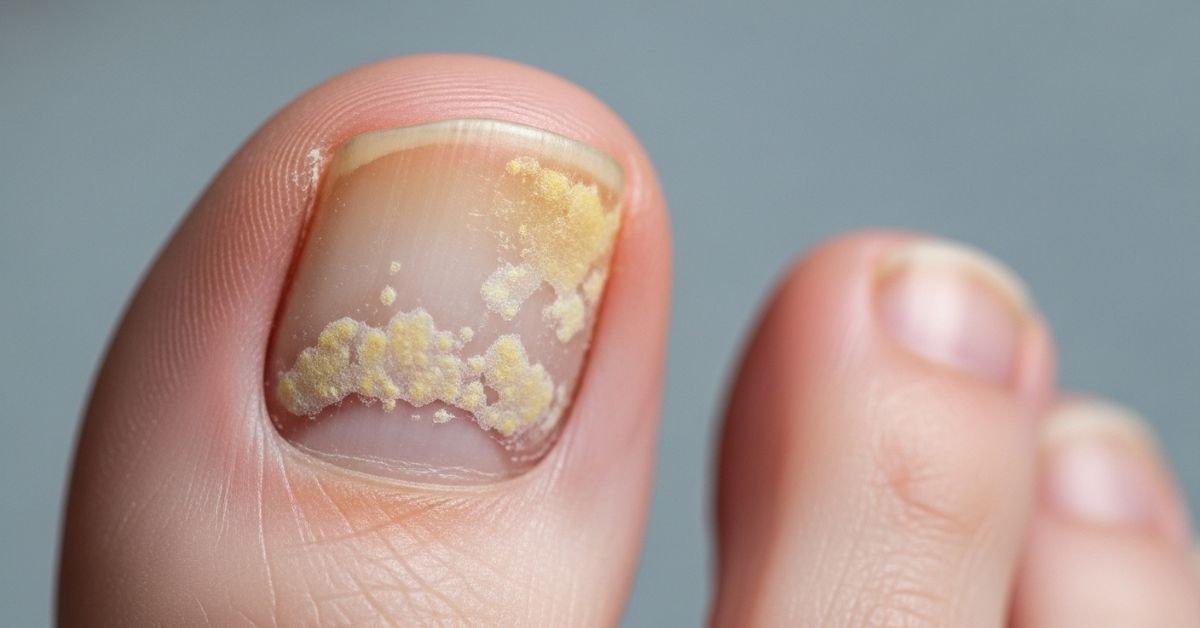
- White or yellow patches that are rough or slightly raised
- The area has grown or spread since you first noticed it
- The nail feels brittle or crumbles slightly when filed
- A faint musty smell develops over time
If you’re genuinely unsure, the safest approach is to treat it as suspected fungus and monitor for 3-4 weeks — mechanical staining typically fades or grows out, while fungal changes persist or spread.
Early Signs to Watch For
Early detection is critical. Look for subtle changes such as:
- White or yellow spots beneath the nail
- Chalky or powdery texture
- Mild thickening or rough edges
- Slight crumbling when filing
If you’re unsure whether these changes indicate fungus or simple nail damage, comparing visual examples can help:
👉 What Does Toenail Fungus Look Like? (Pictures & Early Signs)
How Toenail Fungus Develops
Fungal organisms gradually break down keratin, the protein that gives nails their structure. Over time, this may lead to:
- Softening of the nail surface
- Yellow or white debris under the nail
- Loss of smoothness
- Partial lifting from the nail bed
If untreated, fungal infections may:
- Spread to nearby nails
- Cause permanent thickening or discoloration
- Become harder to treat later
If only one nail is affected after acrylic removal, this guide may also be useful:
👉 Toenail Fungus in One Nail: Causes, Risks & What to Do
Who Is at Higher Risk?
Certain factors increase the likelihood of fungal infection after acrylic nails:
- Wearing acrylics continuously without breaks
- Excessive sweating or moisture
- Regular use of gyms, pools, or communal showers
- Diabetes or weakened immunity
- Repeated nail trauma during application or removal
✅ Key Takeaway
Taking a break between acrylic fills — even just a week or two of letting the natural nail breathe — meaningfully reduces the moisture buildup that gives fungus a foothold in the first place.
How to Treat Toenail Fungus After Acrylic Nails
Mild or early infections can sometimes be managed at home when addressed promptly.
Over-the-Counter Antifungal Treatments
Topical antifungal creams and sprays are commonly used. However, many people find that:
- Creams struggle to penetrate thickened nails
- Results are slow or inconsistent
This is especially true after acrylic use, where the nail surface may already be compromised.
Nail Hygiene & Daily Care
Consistent hygiene plays a major role in recovery:
- Remove acrylics completely
- Trim nails straight across
- Keep feet clean and fully dry
- Change socks daily
- Disinfect nail tools regularly
- Avoid sharing clippers or files
Oil-Based & Botanical Options
Some oil-based or botanical blends are designed to absorb into the nail surface more effectively than traditional creams. These often combine antifungal oils with nourishing ingredients that support nail recovery.
Not all solutions work the same way — some focus only on killing fungus, while others aim to penetrate, condition, and protect the nail at the same time.
See the Kerassentials Review →
When to See a Healthcare Professional
Seek medical advice if:
- Nails become painful, thick, or dark
- Multiple nails are affected
- You have diabetes or circulation issues
- There’s no improvement after several weeks
A professional can confirm whether it’s truly fungal and recommend prescription options if necessary.
FAQ
Is toenail fungus contagious? Yes. It can spread via shared showers, floors, towels, or nail tools.
Can I keep acrylic nails while treating fungus? It’s strongly recommended to remove them so treatments can reach the nail surface.
Does toenail fungus go away on its own? Rarely. Most cases require active treatment.
How long does treatment take? Visible improvement may take weeks; full nail regrowth can take several months.
How long should I wait between acrylic fills to protect my nail health? There’s no universally agreed number, but many nail technicians recommend at least a few days of bare-nail time between fills, and a longer break (2-4 weeks) every few months to let the natural nail recover.
Choosing the Right Treatment Approach
Toenail fungus after acrylic nails is common — and manageable when caught early.
Standard antifungal creams, improved hygiene, and oil-based blends all address the issue differently. Understanding how each approach interacts with the nail helps you choose the option that best fits your situation.
🦶 See Official Pricing & Choose Your Package
A focused formula anchored by undecylenic acid, an FDA-recognized antifungal — our top-ranked topical option.
Check Kerassentials Pricing →
Laura Collins
Editorial direction for Nail Health Guide. Every claim in this guide was cross-referenced against publicly available dermatology research before publishing.
Continue reading:
- 👉 Kerassentials Review: Does It Really Work?
- 👉 What Does Toenail Fungus Look Like? Pictures & Early Signs
- 👉 Toenail Fungus in One Nail: Causes, Risks & What to Do
- 👉 How to Treat Toenail Fungus at Home
- 👉 Best Toenail Fungus Treatment in 2026
⚠️ Medical Disclaimer: This content is for informational purposes only and is not medical advice. Consult a healthcare provider before starting any new treatment, especially if you take medication or have an underlying health condition.
Affiliate Disclosure: This page contains affiliate links. If you purchase through our link, we may earn a commission at no additional cost to you. This does not influence our evaluation.