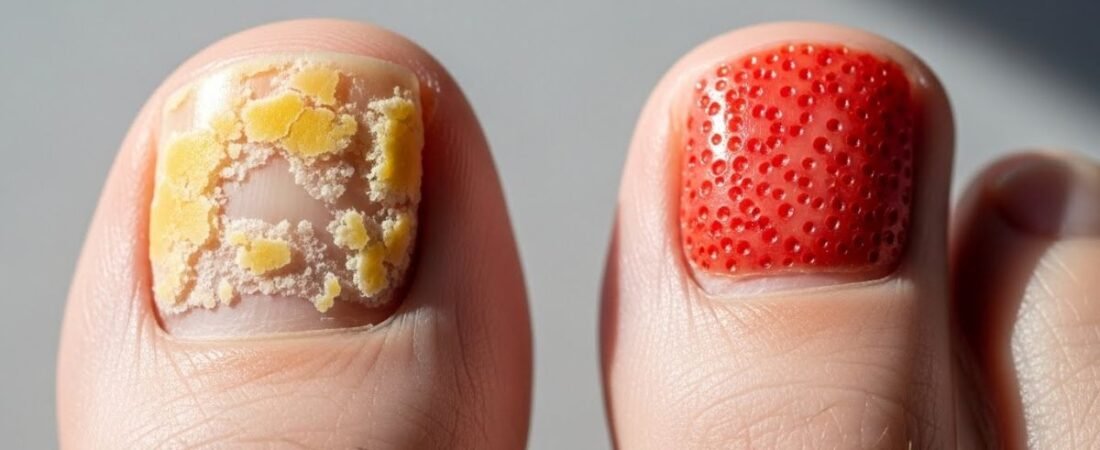
Toenail fungus typically causes yellow, thickened, and brittle nails, while nail psoriasis often shows red, pitted, or ridged nails. Early identification ensures proper treatment and helps prevent the condition from getting worse.
Distinguishing toenail fungus vs nail psoriasis can be challenging because both conditions affect nail appearance. However, they have very different causes — fungal infection vs autoimmune inflammation — and require different treatments.
👉 For visual reference, see:
What Does Toenail Fungus Look Like? (Pictures & Early Signs)
Key Differences Between Toenail Fungus and Nail Psoriasis
Understanding the key differences helps you identify the cause and choose the correct care approach.
Color and Texture
- Toenail fungus: Yellow, brown, or off-white discoloration; thick, brittle, or crumbly nails
- Nail psoriasis: Red or pink tones; pitted, ridged, or uneven nail surface; sometimes shiny
Nail Thickness and Shape
- Fungus: Nails often thicken, lift from the nail bed, or crumble
- Psoriasis: Nails may stay attached but grow abnormally or develop surface dents
Symptoms Beyond the Nail
- Fungus: May cause odor, debris buildup, and spread to other nails
- Psoriasis: Often appears with skin plaques, redness, or joint symptoms
👉 Related reading on fungal nail appearance:
White Chalky Toenail Fungus: Why It Happens and How to Treat It at Home
Causes
Toenail Fungus
Toenail fungus develops when fungi enter the nail through tiny cracks or trauma. Common risk factors include:
- Walking barefoot in damp public areas
- Nail injuries or weakened immune response
- Poor hygiene or contaminated pedicure tools
👉 Learn why fungus may affect only one nail:
Toenail Fungus in One Nail: Causes, Risks, and What to Do
Nail Psoriasis
Nail psoriasis is an autoimmune condition that causes rapid skin cell turnover. Triggers include:
- Genetic predisposition
- Existing skin or joint psoriasis
- Stress or immune system flare-ups
Unlike fungus, psoriasis is not contagious.
Treatment Approaches
Toenail Fungus Treatments
Effective treatment focuses on eliminating the fungal infection and supporting healthy nail regrowth:
- Topical antifungals or medicated nail solutions
- Oral antifungal medications for stubborn cases
- Laser therapy for deeper infections
👉 Expert comparison:
Best Toenail Fungus Treatments in 2026: Expert Guide to Top Solutions
👉 At-home strategies:
How to Treat Toenail Fungus at Home (Fast Remedies + Expert Tips)
Nail Psoriasis Treatments
Treatment focuses on reducing inflammation and managing autoimmune activity:
- Topical corticosteroids or vitamin D creams
- Systemic medications for severe cases
- Moisturizers to reduce brittleness and splitting
A dermatologist is often required for accurate diagnosis and management.
Prevention and Nail Care Tips
Regardless of the condition, proper nail care reduces complications:
- Keep nails trimmed, clean, and dry
- Avoid walking barefoot in public wet areas
- Protect nails from repeated trauma
- Monitor nail changes if you have psoriasis or immune conditions
👉 Common mistakes to avoid:
Common Mistakes People Make When Treating Toenail Fungus
FAQs – Toenail Fungus vs Nail Psoriasis
How can I tell if it’s fungus or psoriasis?
Look at nail color, texture, thickness, and whether skin plaques or joint symptoms are present.
Can both conditions occur together?
Yes. Fungal infections can develop on nails already affected by psoriasis.
Are home remedies effective for fungal nails?
They may help mild cases, but targeted antifungal treatment is usually more reliable.
Is nail psoriasis contagious?
No. Psoriasis is autoimmune and cannot spread to others.
Final Thoughts
Correctly identifying toenail fungus vs nail psoriasis is essential for effective treatment. Treating the wrong condition can delay healing and worsen nail damage.
If nails are yellow, thick, crumbly, or spreading, fungal infection is more likely. If nails show pitting, ridges, or redness with skin symptoms, psoriasis may be the cause.
👉 For related nail infection scenarios, see:
Toenail Fungus After Acrylic Nails: Causes, Early Signs & What to Do
Reviewed by Laura Collins
Editor & Lead Content Researcher at Nail Health Guide
Laura Collins reviews nail health content using a research-based approach focused on clarity, accuracy, and real-world relevance.
Learn more about Laura Collins