

Written by the Nail Health Guide Editorial Team Reviewed by Laura Collins, Editorial Lead.
Toenail fungus is one of the most common nail problems in adults — but most people don’t fully understand what causes it, why it’s hard to treat, or what to expect during recovery.
This guide covers everything in one place: what toenail fungus is, why it happens, what it looks like at each stage, who’s most at risk, and what actually works to clear it.
What Is Toenail Fungus?
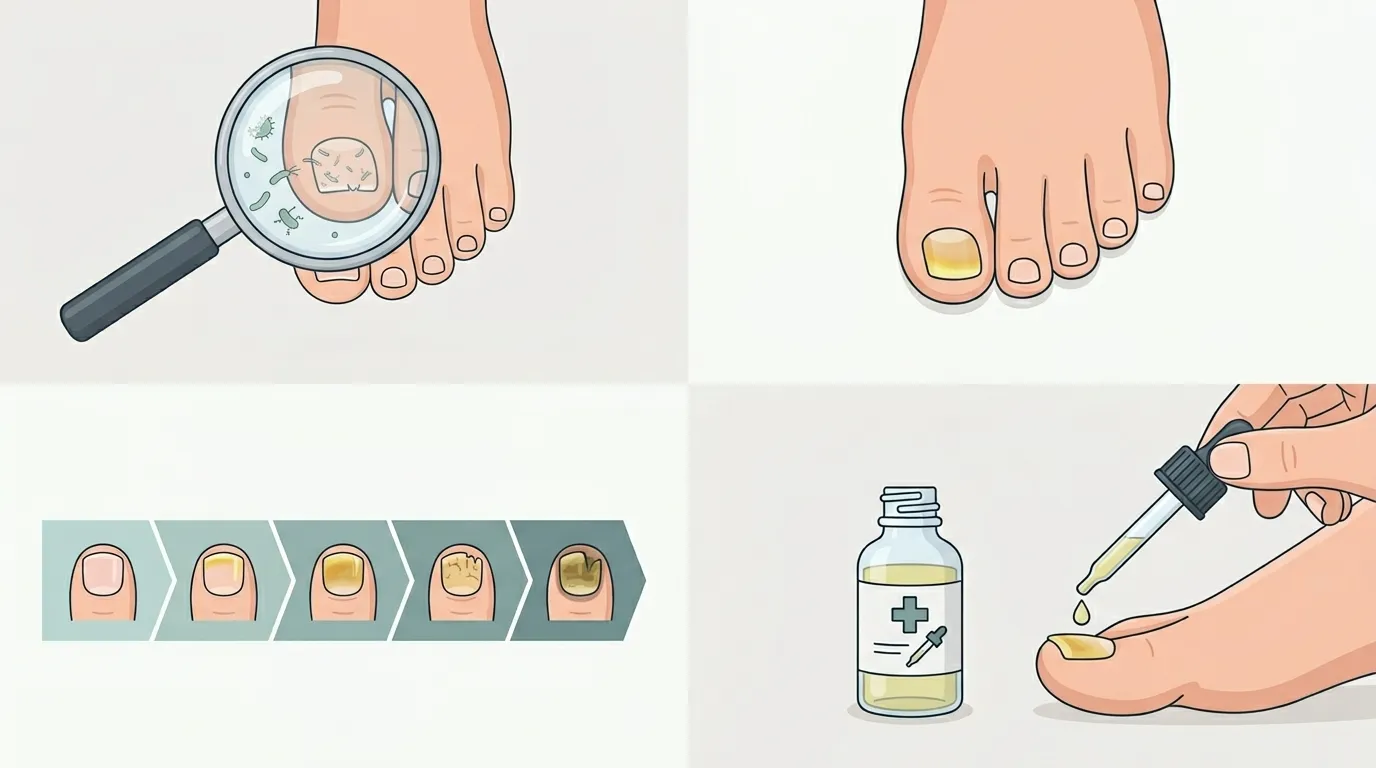
Toenail fungus is an infection caused by microscopic fungi that get into the nail through a small crack or opening. Once inside, the fungus feeds on the protein that nails are made of — called keratin — and slowly breaks the nail down from the inside.
It’s not dangerous for most healthy adults. But it doesn’t go away on its own, and it gets worse over time if left untreated.
The medical name is onychomycosis — but you don’t need to remember that. What matters is recognizing it early and treating it before it spreads.
What Causes Toenail Fungus?
Toenail fungus is caused by fungi — tiny organisms that love warm, moist, dark environments. Your shoes are a perfect home for them.
The most common causes:
Walking barefoot in public places Gym showers, locker rooms, swimming pools, and yoga studios are full of fungal spores left by other people. Walking barefoot in these areas is one of the most common ways people pick up the infection.
Tight or non-breathable shoes Shoes that don’t let air circulate keep your feet warm and moist — ideal conditions for fungi to grow. Synthetic materials are especially bad for this.
Nail damage or injury A cracked, bruised, or damaged nail creates a small opening where fungi can enter. Runners and people who wear tight shoes are particularly at risk because of repeated pressure on the nails.
Athlete’s foot Athlete’s foot is a fungal skin infection between the toes — caused by the same type of fungus. If left untreated, it can travel from the skin to the nail.
Sharing personal items Nail clippers, socks, shoes, and towels can all carry fungal spores from one person to another.
Nail salons with poor hygiene If tools aren’t properly sterilized between clients, fungal infections can spread from person to person.
Who Gets It? Risk Factors
Some people are more likely to develop toenail fungus than others:
- Older adults — nails grow more slowly and become more porous with age
- People with diabetes — reduced circulation and immune function make infections harder to fight. If you’re managing blood sugar, understanding the broader connection between diabetes and foot health is worth a few extra minutes.
- Athletes and runners — repeated nail trauma and sweaty feet
- People who wear tight or non-breathable shoes daily
- Anyone with athlete’s foot — the skin infection often travels to the nail
- People who frequent pools, gyms, or locker rooms
- People with a weakened immune system
👉 Toenail Fungus Risk Factors: Who Is Most at Risk?
👉 Toenail Fungus in Athletes & Runners
👉 Toenail Fungus in Seniors
Symptoms: What Does Toenail Fungus Look Like?
Toenail fungus looks different depending on how far along it is.
Early signs:
- Small white or yellow spot near the tip or edge of the nail
- Nail looks slightly dull in one area
- Rough texture on the nail surface
- No pain, no smell — easy to miss
As it gets worse:
- Yellow or brown color spreading inward from the tip
- Nail getting thicker
- Edges becoming brittle and rough
- Nail starting to lift slightly from the skin underneath
Advanced signs:
- Dark yellow, brown, or black nail
- Very thick, crumbly nail
- Nail separating from the nail bed
- Possible mild odor
- Occasional pain when wearing shoes
👉 What Does Toenail Fungus Look Like? Pictures & Early Signs
Stages: How It Progresses
Toenail fungus doesn’t stay the same — it gets worse over time without treatment.
Stage 1 — Early A small spot. The nail looks mostly normal. Easy to treat. Most people miss this stage.
Stage 2 — Moderate Discoloration spreading. Nail thickening. Still treatable at home with consistent effort.
Stage 3 — Advanced Nail severely damaged, thick, and dark. May be lifting from the nail bed. Often needs prescription treatment.
The earlier you catch it, the faster and easier it is to treat.
👉 Toenail Fungus Stages: How to Tell If It’s Early, Progressing, or Already Advanced
Is It Contagious?
Yes — toenail fungus can spread to other people and to your other nails.
It spreads through:
- Shared nail clippers, towels, and socks
- Contaminated floors in public areas
- Walking barefoot where someone with fungus has walked
- Your own shoes (spores survive inside shoes for months)
It does NOT spread through the air or casual contact like a handshake.
👉 Is Toenail Fungus Contagious? How It Spreads & How to Protect Yourself
Special Situations
After acrylic nails: Artificial nails trap moisture and create ideal conditions for fungal growth underneath the nail. 👉 Toenail Fungus After Acrylic Nails
After a pedicure: Improperly sterilized tools or foot baths can spread fungal infections between clients. 👉 Toenail Fungus After a Pedicure
Under nail polish: Wearing polish over an infected nail traps moisture and makes the infection worse. 👉 Toenail Fungus Under Nail Polish: Can It Get Worse?
Spreading to fingernails: It can happen — usually through touching the infected toenail and then the fingernails without washing hands. 👉 Can Nail Fungus Spread to Fingernails?
Treatment: What Actually Works
For mild to moderate infections (Stage 1–2): Home treatment with a topical antifungal applied twice daily is appropriate and effective. The key is consistency — applying every day without skipping for several months.
Natural options that work:
- Tea tree oil
- Undecylenic acid (FDA-recognized antifungal)
- Formulated products like Kerabiotics, Kerassentials, or TerraCalm
For advanced infections (Stage 3): Prescription oral antifungals — like terbinafine — work from the inside and are more effective for severe cases. See a dermatologist or podiatrist.
How long does it take?
- Stage 1: 6–9 months total
- Stage 2: 9–12 months total
- Stage 3: 12–18 months total
👉 How to Treat Toenail Fungus at Home: What Really Works
👉 Best Toenail Fungus Treatments in 2026
Prevention: How to Avoid Getting It Again
Once you’ve cleared toenail fungus — or if you’ve never had it and want to keep it that way — these habits make a real difference:
- Wear footwear in public showers, locker rooms, and pool areas
- Keep nails trimmed short and dry
- Change socks every day
- Rotate shoes — never wear the same pair two days in a row
- Never share nail clippers, socks, or towels
- Treat athlete’s foot promptly if it appears
- Use breathable, well-fitting footwear
FAQ — Toenail Fungus Causes & Treatment
Almost never. Most infections continue to get worse without treatment. The earlier you start, the faster and easier it clears. 👉 See the full, honest breakdown of why — and what happens if you wait.
Usually not in the early stages. Pain can develop in advanced cases when the thickened nail presses against your shoe.
Yes — if tools aren’t properly sterilized between clients. Always check that your salon sterilizes equipment or bring your own nail tools.
They’re caused by the same type of fungus — but they’re different infections. Athlete’s foot affects the skin between the toes. Toenail fungus affects the nail itself. They often occur together.
Yes, though it’s less common in children than in adults. The same causes and treatments apply
Final Thoughts
Toenail fungus is common, treatable, and preventable. The key is catching it early — before it has time to deepen and spread.
If you’ve noticed a small spot or change in a nail, don’t wait. Compare your symptoms, identify your stage, and start treatment.
The sooner you start, the sooner you’re done.
👉 What Does Toenail Fungus Look Like? See the Pictures
👉 How to Treat Toenail Fungus at Home
Reviewed by Laura Collins — Editorial Lead at Nail Health Guide. Learn more about Laura Collins
⚠️ Medical Disclaimer: This content is for informational purposes only. Always consult a healthcare professional for diagnosis and treatment.