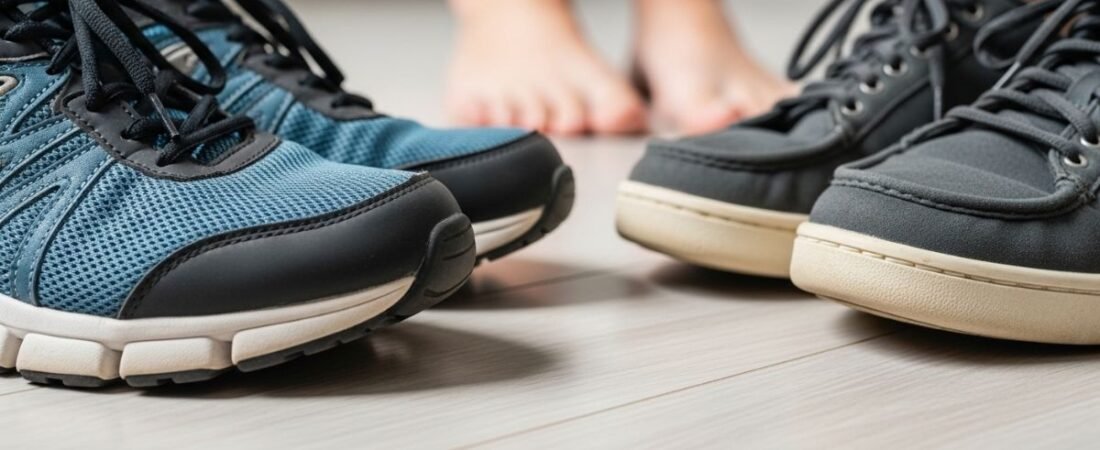
Toenail fungus often doesn’t start with the nail — it starts with your shoes.
Even after successful treatment, many people see the infection return because fungal spores remain inside footwear. Warm, dark, and moist shoes create the perfect environment for fungus to survive and reinfect healthy nails.
This guide explains how shoes contribute to toenail fungus, how to properly clean and disinfect them, and what steps actually prevent reinfection long term.
How Shoes Contribute to Toenail Fungus
Fungal spores thrive in environments that are:
- Warm
- Moist
- Dark
- Poorly ventilated
Shoes check all those boxes.
Common shoe-related triggers include:
- Wearing the same shoes daily without drying
- Sweat-soaked athletic shoes
- Tight footwear causing nail trauma
- Non-breathable materials
- Walking barefoot inside contaminated shoes
This explains why toenail fungus often keeps coming back, even after treatment.
👉 Learn more about recurrence here:
Why Toenail Fungus Keeps Coming Back (And How to Finally Stop It)
Can Shoes Really Reinfect Toenail Fungus?
Yes — absolutely.
Fungal spores can survive weeks or even months inside shoes. When you treat the nail but ignore footwear, you’re often stepping right back into the source of infection.
This is especially common when:
- Only one nail was treated
- Shoes were never disinfected
- Moisture control was ignored
👉 This is why some people notice fungus returning in just one nail again:
Toenail Fungus in One Nail: Causes, Risks, and What to Do
How to Clean Shoes After Toenail Fungus (Step-by-Step)
1. Rotate Shoes Daily
Never wear the same pair two days in a row.
Shoes need 24–48 hours to dry completely.
2. Wash Washable Shoes
For sneakers or fabric shoes:
- Use hot water if allowed
- Add antifungal laundry additive or vinegar
- Dry fully (preferably in sunlight)
3. Disinfect Non-Washable Shoes
For leather or dress shoes:
- Use antifungal shoe sprays
- UV shoe sanitizers (effective for killing spores)
- Antifungal powders overnight
4. Remove & Clean Insoles
Insoles trap sweat and fungus.
- Replace if possible
- Wash or spray regularly
- Allow full drying
Best Ways to Disinfect Shoes From Fungus
✔ Antifungal sprays
✔ UV shoe sanitizers
✔ Antifungal powders
✔ Sunlight exposure
✔ Proper airflow and drying
⚠️ Avoid relying on odor sprays — they do not kill fungus.
Shoe Habits That Make Toenail Fungus Worse
Avoid these common mistakes:
❌ Wearing damp shoes
❌ Tight footwear that causes nail trauma
❌ Covering infected nails with polish
❌ Ignoring early symptoms
❌ Wearing the same shoes during treatment
👉 These are also listed among the most common treatment errors:
Common Mistakes People Make When Treating Toenail Fungus
The Role of Nail Trauma From Shoes
Repeated pressure from tight shoes can damage the nail plate, creating micro-cracks where fungus enters.
This is why fungus is often confused with trauma — or vice versa.
👉 If you’re unsure which one you’re dealing with, compare carefully here:
Toenail Fungus vs Nail Trauma: How to Tell the Difference
Daily Prevention Routine (Simple but Powerful)
Daily:
✔ Change socks at least once per day
✔ Dry feet completely before shoes
✔ Use antifungal foot powder if sweating
✔ Alternate footwear
Weekly:
✔ Disinfect shoes
✔ Clean nail tools
✔ Inspect nails for early changes
Supporting Nail Recovery While Preventing Reinfection
Disinfecting shoes alone isn’t enough — nail care matters too.
Many people pair shoe hygiene with:
- Gentle trimming
- Keeping nails dry
- A targeted topical antifungal solution
👉 If you want to understand which treatments actually work best, see:
Best Toenail Fungus Treatments in 2026: Expert Guide to Top Solutions
When Reinfection Keeps Happening
If fungus returns despite shoe hygiene, it may be:
- Deep nail involvement
- Slow nail growth
- Incomplete treatment
- Ongoing moisture exposure
👉 Learn why treatment sometimes fails:
Toenail Fungus Not Responding to Treatment? Here’s Why
Final Thoughts: Shoes Matter More Than You Think
Toenail fungus isn’t just a nail problem — it’s often a shoe problem.
Key takeaways:
✔ Fungus survives inside shoes
✔ Reinfection is common without disinfection
✔ Shoe rotation and drying are essential
✔ Prevention is easier than retreatment
Treating the nail and the environment is what finally breaks the cycle.
Reviewed by Laura Collins
Editor & Lead Content Researcher at Nail Health Guide
Laura Collins reviews nail health content using a research-based approach focused on clarity, accuracy, and real-world relevance.
Learn more about Laura Collins