Toenail fungus is significantly more common among athletes and runners than in the general population. If you train regularly, run long distances, or spend hours in athletic shoes, your toenails are constantly exposed to the exact conditions fungus loves.
Sweat, friction, repetitive nail trauma, and slow nail recovery create the perfect environment for infection — often starting in just one nail and spreading gradually.
This guide explains why athletes are at higher risk, early warning signs to watch for, and how to treat and prevent toenail fungus without interrupting your training.
Why Athletes & Runners Get Toenail Fungus More Often
Toenail fungus (onychomycosis) thrives in warm, moist, enclosed environments — which makes athletic footwear a prime risk factor.
Key reasons athletes are vulnerable:
1. Constant moisture
Sweaty feet trapped in shoes allow fungal spores to multiply quickly.
2. Repetitive nail trauma
Running causes micro-trauma from:
- Tight toe boxes
- Long downhill runs
- Sudden stops or direction changes
This damage creates tiny cracks where fungus can enter.
👉 Many athletes confuse fungus with nail trauma. See the difference here:
3. Communal environments
Locker rooms, gyms, pools, and shared showers are common sources of fungal exposure.
4. Slow nail regrowth
Toenails grow slowly, especially under repeated stress — making infections harder to clear once established.
Early Signs Athletes Often Ignore
Because runners expect “ugly nails,” fungus is often overlooked until it worsens.
Watch for:
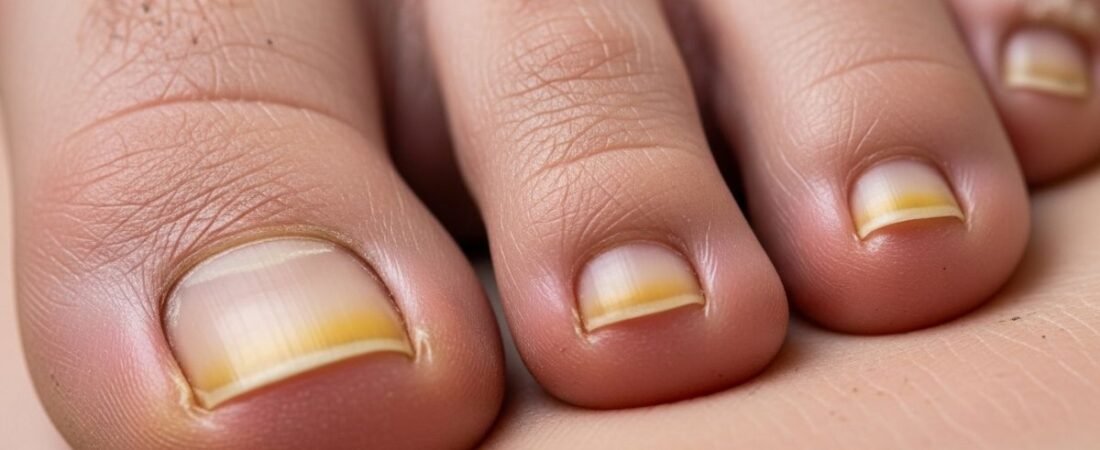
- White or yellow spots on one toenail
- Chalky or powdery surface
- Mild thickening
- Brittle or crumbly edges
- Discoloration that doesn’t grow out
Why It Often Starts in Just One Nail
Athletes frequently ask why only one toenail is affected.
Common triggers:
- One toe absorbing most shoe pressure
- Previous injury to a single nail
- Shoe fit imbalance
Without treatment, fungus can spread to nearby nails — especially when training continues.
How to Treat Toenail Fungus as an Athlete
1. Control Moisture First (Critical)
Treatment won’t work if feet stay damp.
✔ Dry feet thoroughly after workouts
✔ Change socks immediately
✔ Rotate shoes daily
✔ Use antifungal foot powder
2. Trim & File Nails Correctly
- Keep nails short and straight
- Lightly file thickened areas
- Disinfect tools after every use
3. Use a Targeted Topical Antifungal (Most Effective)
Standard creams often fail to penetrate thick athletic nails.
Many athletes prefer oil-based antifungal solutions designed for nail absorption.
👉 Full breakdown and comparison:
4. Avoid Covering Infected Nails
Nail polish and cosmetic coverings trap moisture and worsen fungal growth.
👉 Why infections keep returning:
Can Athletes Keep Training During Treatment?
Yes — in most cases.
You can continue running if:
- There’s no pain
- The nail isn’t lifting
- Infection is mild to moderate
Prevention Tips for Runners & Athletes
✔ Choose breathable shoes
✔ Avoid tight toe boxes
✔ Wash feet immediately after training
✔ Disinfect shoes regularly
✔ Never share nail tools
✔ Treat early
👉 Best treatment options overview:
When Athletes Should See a Doctor
Consult a professional if:
- Multiple nails are infected
- Nail becomes painful or lifts
- No improvement after 6–8 weeks
- You have diabetes or circulation issues
👉 Recovery timeline explained:
Final Verdict
Toenail fungus is common among athletes — but highly preventable.
Early action is the difference between:
- a short recovery
- and a long-term nail problem
Control moisture, protect nails from trauma, and use treatments that actually penetrate the nail.
Reviewed by Laura Collins
Editor & Lead Content Researcher at Nail Health Guide
Laura Collins reviews nail health content using a research-based approach focused on clarity, accuracy, and real-world relevance.
Learn more about Laura Collins