Written by the Nail Health Guide Editorial Team | Updated August 2026 | 9 min read
Affiliate disclosure: This page contains affiliate links — we may earn a commission at no extra cost to you. Medical disclaimer: Not medical advice; consult your doctor before starting any new treatment.
“Kerabiotics scam” is one of the most searched phrases about this product — and it’s a fair question to ask before spending $49–$69 on a supplement.
The short answer is: Kerabiotics is not a scam. But the longer answer is more useful — because understanding why people think it is will help you decide whether it’s the right product for your situation, and whether your expectations are realistic.
⚠️ Important Note
Most “scam” concerns come from one of two sources: unrealistic expectations about speed and results, or purchasing from unofficial third-party sellers who may ship counterfeit or expired product.
Quick Answer: Is Kerabiotics a Scam?
No — Kerabiotics is a legitimate product. It is:
- Manufactured in an FDA-registered, GMP-certified facility in the USA
- Made with real, commonly used cosmetic and topical ingredients
- Backed by a 60-day money-back guarantee
- Sold with no widespread safety reports found in our research
What it is not:
- A prescription-strength antifungal medication
- A product with large-scale clinical trials on the finished formula
- A fast-acting solution — results take months, not weeks
🔍 Quick Fact
Almost none of the “scam” complaints we found reflect actual fraud — they reflect a mismatch between fast-result expectations and the slow biology of nail growth, which applies to every treatment in this category, not just Kerabiotics.
Why Do People Think Kerabiotics Is a Scam?
Understanding this is the most important part of this review. The complaints follow predictable patterns — and almost none of them reflect fraud.
1. Expecting Results in 2–4 Weeks
This is the most common source of disappointment. Toenail fungus doesn’t “clear up” — the infected nail grows out and is replaced by new, healthy nail from the base. For a big toenail, this process takes 9–12 months regardless of which treatment you use.
Kerabiotics supports this process — it doesn’t speed up nail growth itself. People who expect visible transformation within a month and see little change often conclude the product doesn’t work. In reality, the timeline is the issue, not the formula.
👉 For a realistic breakdown of what recovery actually looks like: How Long Does Toenail Fungus Take to Go Away?
2. Inconsistent Application
Kerabiotics requires twice-daily application — morning and night — consistently over several months. People who apply it sporadically break the consistency the formula depends on. This is a user application issue, not a product failure.
3. Using It for Advanced Stage Infections
Kerabiotics is most appropriate for mild to moderate toenail fungus — Stage 1 or 2. For advanced Stage 3 infections, topical solutions alone — any topical solution — often aren’t sufficient. Prescription oral antifungals are typically more effective at that stage.
👉 Not sure which stage you’re at? Toenail Fungus Stages: How to Tell If It’s Early or Advanced
4. Purchasing from Unofficial Sources
This is a real concern — and the one case where “scam” language is partially justified.
Kerabiotics is sold primarily through its official website. Third-party sellers on Amazon, eBay, or other platforms may sell counterfeit products, expired inventory, or products with suspicious packaging.
The official 60-day money-back guarantee only applies to purchases through the official website.
Order Through the Verified Official Site →
Real Kerabiotics Complaints: What Users Actually Report
“It didn’t work fast enough” The most common complaint — reflects timeline mismatch, not product failure.
“I didn’t see major changes after one bottle” One bottle is a 30-day supply. The manufacturer recommends 3–6 bottles for meaningful results.
“Results were too gradual” Gradual is how toenail fungus treatment works — whether you’re using Kerabiotics, prescription ciclopirox, or oral terbinafine.
“Price is too high” At $49–$69 per bottle, more expensive than basic OTC creams — a legitimate criticism, though the formula includes probiotic strains and botanical extracts that add cost.
“Customer service was slow” Some users report delays in refund processing — appears to be a service issue, not a systematic policy of denying refunds.
✅ Key Takeaway
Notably absent from real complaints: widespread reports of the product never arriving, dangerous side effects, hidden subscription charges, or legitimate refunds being systematically denied.
Kerabiotics Scam Warning Signs: What to Actually Watch For
Red flag 1: Price significantly below official pricing Official pricing starts at $49/bottle for the 6-bottle pack. Prices of $15–$25 anywhere else are almost certainly counterfeit or expired.
Red flag 2: Selling platform other than the official website Amazon, eBay, and third-party supplement sites are not authorized Kerabiotics sellers. Purchasing there voids the guarantee.
Red flag 3: No money-back guarantee offered The official product comes with a 60-day no-questions-asked refund policy. Any seller not offering this isn’t selling the official product.
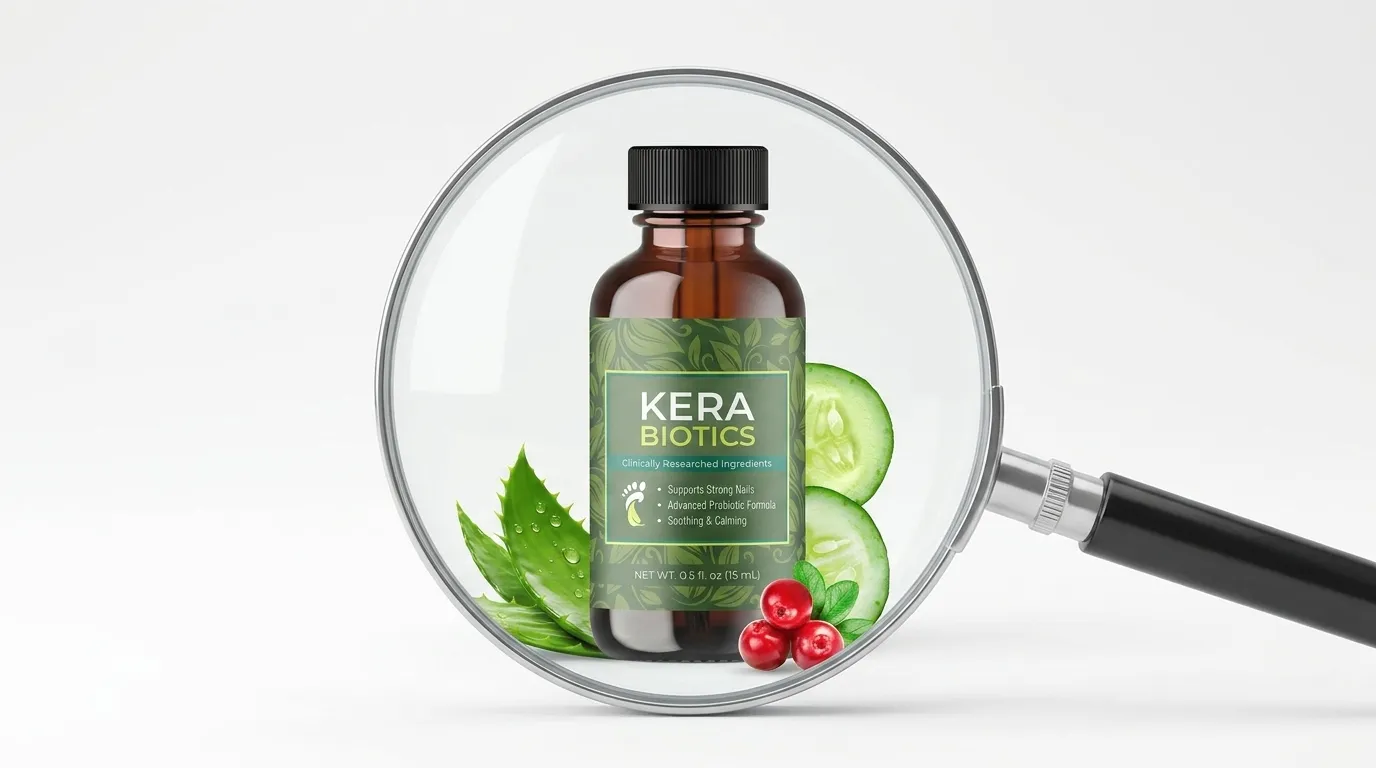
Red flag 4: Suspicious packaging or different label design If your product looks different from official marketing images, contact the company before using it.
What is NOT a red flag: Gradual results, not working for Stage 3 infections, or mixed reviews — every supplement has mixed reviews; the pattern matters more than individual complaints.
Is the 60-Day Money-Back Guarantee Real?
Based on available reports, yes — the manufacturer honors refund requests for purchases made through the official website within the 60-day window.
How to use it safely:
- Keep your order confirmation email
- Contact customer support before the 60-day window closes
- Use the contact information on the official website — not from a third-party seller
If you purchase from an unofficial source and experience issues, the manufacturer is not obligated to honor the guarantee.
Kerabiotics Ingredients: Are They Legitimate?
One reason people suspect a scam is that the ingredient list sounds too “natural” to work. The core ingredients — aloe vera, probiotic strains (Lactobacillus rhamnosus, Bifidobacterium lactis, Lactobacillus acidophilus), copper gluconate, lavender oil, and flaxseed oil — all have individual research supporting their antifungal, antibacterial, or nail-conditioning properties.
What doesn’t exist is a large-scale clinical trial on the finished formula specifically — common across the supplement industry, not a unique Kerabiotics red flag.
👉 Kerabiotics Ingredients: Full Breakdown & Analysis
Who Should and Shouldn’t Use Kerabiotics
Good fit:
- Early to moderate toenail fungus (Stage 1–2)
- People who prefer natural, non-prescription approaches
- Those committed to consistent twice-daily application for 3–6 months
- Anyone who has tried basic OTC creams without satisfactory results
Not a good fit:
- Advanced Stage 3 infections — professional medical evaluation is more appropriate
- Anyone expecting results within 2–4 weeks
- People unwilling or unable to apply consistently twice daily
Pros and Cons
Strengths
- Non-prescription — no doctor visit required
- Easy to apply with the included brush applicator
- Probiotic-based approach addresses the nail microbiome, not just symptoms
- 60-day money-back guarantee removes financial risk
- Manufactured in FDA-registered, GMP-certified USA facility
Drawbacks
- Results are gradual — not suitable for anyone expecting fast results
- More expensive than basic OTC antifungal creams
- Not appropriate for severe infections
- Limited clinical trial data on the finished formula
FAQ — Kerabiotics Scam Questions
Is Kerabiotics FDA approved? No supplement is FDA “approved” the way medications are. Kerabiotics is manufactured in an FDA-registered, GMP-certified facility, meeting manufacturing quality standards.
Why does Kerabiotics have negative reviews? Most reflect expectation mismatch — people expecting fast, dramatic results from a gradual, maintenance-based formula. Some come from people who purchased from unofficial sources.
Can I get a refund if it doesn’t work? Yes, if purchased through the official website within 60 days. Keep your order confirmation and contact support before the deadline.
Is Kerabiotics safe? Generally well-tolerated based on available reports. Mild skin irritation is possible but rare. A patch test is recommended for sensitive skin.
Does Kerabiotics actually work? For mild to moderate nail fungus with consistent use, many users report gradual improvement over 2–4 months. It’s not a guaranteed cure, and results vary based on severity and consistency.
Final Verdict
Kerabiotics is not a scam — it’s a legitimate topical nail support product with real ingredients, a genuine money-back guarantee, and a manufacturer that appears to honor refund requests.
The complaints exist because the product is often misunderstood. It’s not a fast-acting prescription antifungal — it’s a natural, microbiome-focused topical that works gradually over months, which is how toenail fungus treatment works regardless of the specific product.
Ready to Try Kerabiotics?
A legitimate microbiome-based formula with a 60-day money-back guarantee — order only through the verified official link.
Check Pricing — Official Website →
Laura Collins
Editorial direction for Nail Health Guide. This investigation is based on ingredient research, manufacturer claims, and publicly available information.
Continue reading:
- 👉 Kerabiotics Review 2026: Does It Work?
- 👉 Kerabiotics Ingredients: Full Breakdown
- 👉 Kerabiotics Side Effects: Is It Safe?
- 👉 Where to Buy Kerabiotics
- 👉 Best Toenail Fungus Treatment in 2026
⚠️ Medical Disclaimer: This content is for informational purposes only and does not constitute medical advice. Kerabiotics is not a medication and is not intended to diagnose, treat, cure, or prevent any disease. Always consult a qualified healthcare professional for diagnosis and treatment guidance.
Affiliate Disclosure: This article contains affiliate links to the Kerabiotics official website. We may earn a commission if you purchase through our link at no additional cost to you. Our editorial analysis is independent and not influenced by this relationship.