
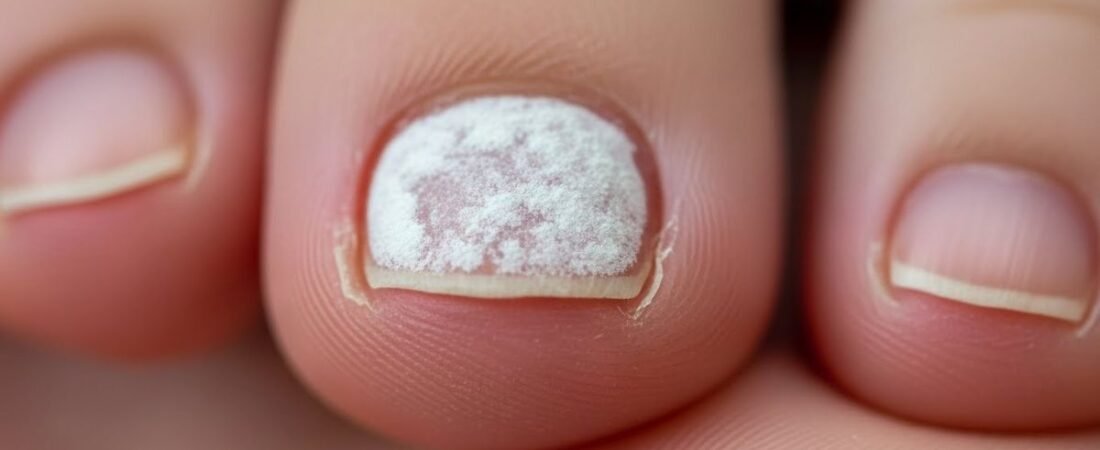
White toenail fungus often begins as small, powdery white patches on the nail surface. Because it usually affects only the top layers at first, early treatment tends to be more effective and can prevent the infection from spreading or causing long-term nail damage.
Understanding how this type of fungal infection develops—and how it differs from deeper nail infections—helps you choose the right approach before the problem progresses.
What Is White Toenail Fungus?
White toenail fungus, medically referred to as superficial white onychomycosis, affects the outermost layer of the nail plate. Unlike more advanced fungal infections that grow beneath the nail, this type remains closer to the surface in its early stages.
It typically appears as chalky white spots or patches that can be scraped lightly in the beginning. Early-stage nail fungus is often easier to manage when addressed before it penetrates deeper nail layers.
What Causes White Fungal Nail Infections?
White fungal nails develop when fungal spores settle on the nail surface and find conditions that allow them to grow. Common contributing factors include:
Minor Nail Injuries
Small cracks, aggressive filing, or repeated trauma can weaken the nail surface, allowing fungus to take hold more easily.
Moisture and Poor Foot Hygiene
Damp socks, sweaty feet, and shoes with poor airflow create an ideal environment for fungal growth.
Exposure in Public Areas
Walking barefoot in communal showers, pools, or gym locker rooms increases exposure to fungal spores.
Weakened Immune Function
People with compromised immune systems may be more susceptible, even with minimal exposure.
Early Signs of White Toenail Fungus
Recognizing white toenail fungus early improves treatment success and limits spread. Common signs include:
- Powdery or chalky white spots on the nail
- Rough or uneven nail texture
- Mild surface thickening
- Brittle or crumbling edges in some cases
If you’re unsure whether nail changes are fungal or something else, visual references can help:
👉 What Does Toenail Fungus Look Like? (Pictures & Early Signs)
How White Toenail Fungus Progresses Over Time
Although it may seem cosmetic at first, untreated white toenail fungus can slowly penetrate deeper layers of the nail. As this happens, treatment becomes more difficult and nail regrowth takes longer.
This is why surface-level infections shouldn’t be ignored—even when discomfort is minimal.
👉 Toenail Fungus Stages: How to Tell If It’s Early, Progressing, or Advanced
Treatment Options for White Fungal Nails
Treatment choice depends on how early the infection is caught and how consistently care is applied.
At-Home Treatments (Early Stages)
- Topical antifungal creams or medicated nail lacquers
- Natural antifungal oils (supportive, not standalone solutions)
- Keeping nails clean, dry, and trimmed
These approaches may help when the infection is truly superficial.
👉 How to Treat Toenail Fungus at Home (Fast Remedies + Expert Tips)
Professional Treatments (Persistent Cases)
- Oral antifungal medications (doctor-supervised)
- Laser therapy in some cases
More advanced options are usually considered when surface treatments fail or the infection spreads.
👉 Best Toenail Fungus Treatments in 2026: Expert Comparison
Why White Toenail Fungus Often Comes Back
Many people assume hygiene alone will fully solve early fungal infections. However, recurrence is common when treatment doesn’t adequately address fungal penetration into the nail structure.
Before choosing a treatment, understanding whether the infection is still surface-level—or already affecting deeper nail layers—can significantly change the approach.
👉 Kerassentials Review (2026): Can This Natural Oil Stop Toenail Fungus From Spreading?
Preventing White Toenail Fungus From Spreading
Even after improvement, prevention remains critical:
- Wear breathable shoes and moisture-wicking socks
- Avoid walking barefoot in public wet areas
- Keep nails trimmed and clean
- Disinfect pedicure tools regularly
Final Thoughts
White toenail fungus often starts small, but ignoring it can allow the infection to spread deeper into the nail or to surrounding nails. Early recognition, consistent care, and choosing the right treatment strategy greatly improve outcomes.
If you’re still weighing which approach makes the most sense, comparing treatment categories side by side can provide clarity before committing long-term.
👉 Compare treatment options and what to consider before choosing one
Reviewed by Laura Collins
Editor & Lead Content Researcher at Nail Health Guide
Laura Collins reviews nail health content using a research-based approach focused on clarity, accuracy, and real-world relevance.
Learn more about Laura Collins