

Toenail fungus usually starts as a small white or yellow spot under the nail. Over time, it can turn the nail yellow, brown, thickened, brittle, and sometimes distorted.
While it may look harmless in the beginning, early identification can make treatment significantly easier.
If you’ve noticed a small discoloration that seems to be spreading slowly or returning after trimming the nail, you’re not alone. Many people ignore early nail changes because they don’t hurt — until the damage becomes harder to reverse.
In this guide, you’ll learn what toenail fungus looks like at each stage, how it progresses, and when it’s time to consider treatment.
What Is Toenail Fungus?
Toenail fungus, medically known as onychomycosis, is a fungal infection that occurs when microscopic fungi enter the nail through tiny cracks or separation from the nail bed.
According to the American Academy of Dermatology, fungal nail infections are common in adults and tend to develop slowly over time.
According to dermatology data, toenail fungus affects an estimated 10% of the general population, and prevalence increases significantly after age 60. Because it develops slowly and often without pain, many cases go untreated for months or even years.
Fungi thrive in warm, moist environments, which is why infections often begin after:
• Wearing tight or sweaty shoes
• Walking barefoot in public showers
• Nail trauma or pedicures with non-sterile tools
Once established, the fungus feeds on keratin — the protein that makes up your nails — and gradually spreads deeper.
As the fungi invade the nail plate, they create microscopic tunnels within the keratin layers, which is why discoloration and thickening tend to worsen gradually rather than overnight.
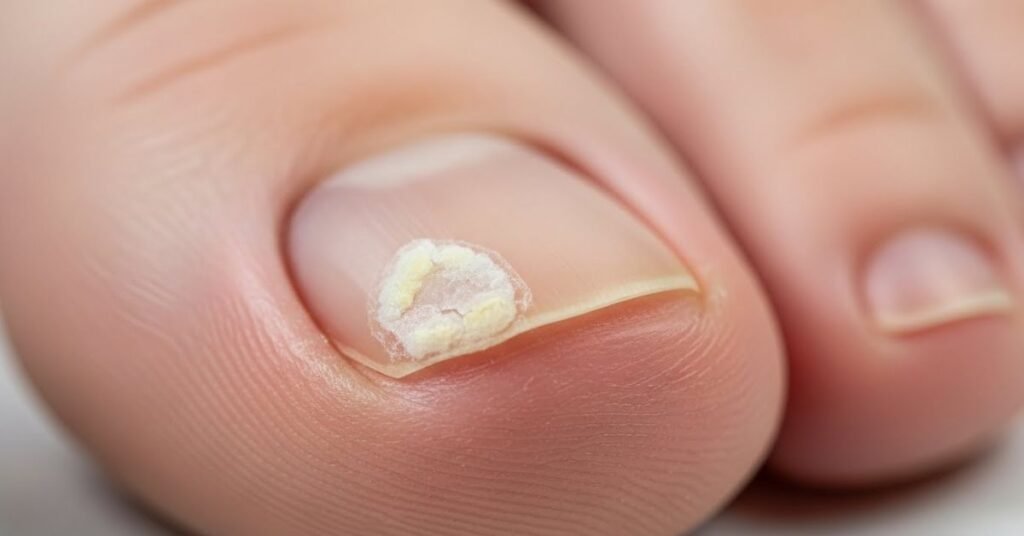
Early Signs of Toenail Fungus (Stage 1)
You may notice:
• A small white or pale yellow spot
• Slight discoloration near the tip
• Dull appearance
• Very mild thickening
At this stage:
• There is usually no pain
• No odor
• The nail still looks mostly normal
This is the easiest stage to address.
If you’re unsure whether your symptoms match early fungal infection, you can compare how mild, moderate, and advanced cases are typically treated here:
👉 Best Toenail Fungus Treatments (Guide)
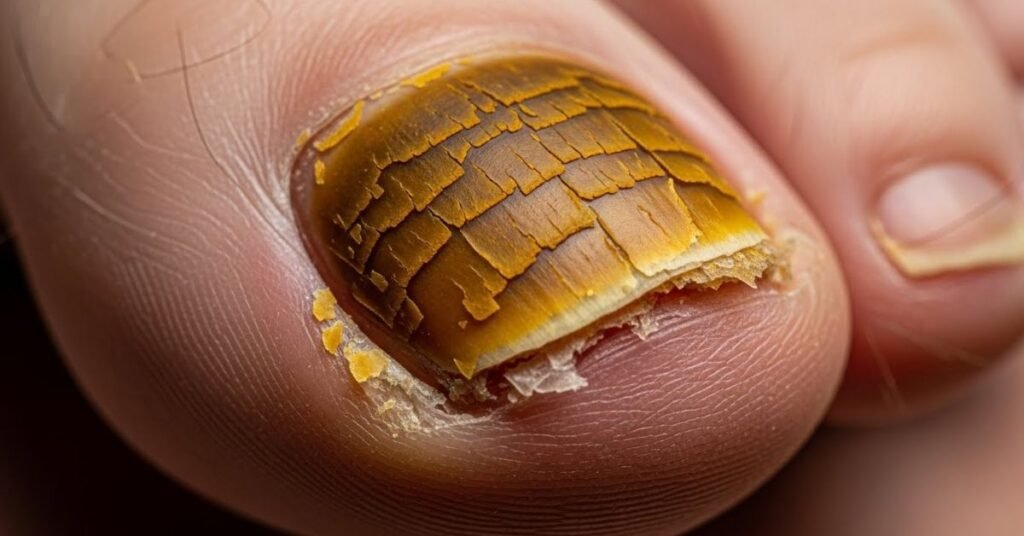
What Happens as It Progresses? (Stage 2)
As the fungus spreads under the nail:
• Yellow or brown discoloration becomes more visible
• The nail thickens
• Edges may look rough or uneven
• The nail may begin lifting slightly
This happens because the fungus continues breaking down keratin, weakening the nail structure from underneath.
One common frustration at this stage is that standard antifungal creams may not fully penetrate the hardened nail surface. That’s why consistency — and sometimes alternative formulations — become important.
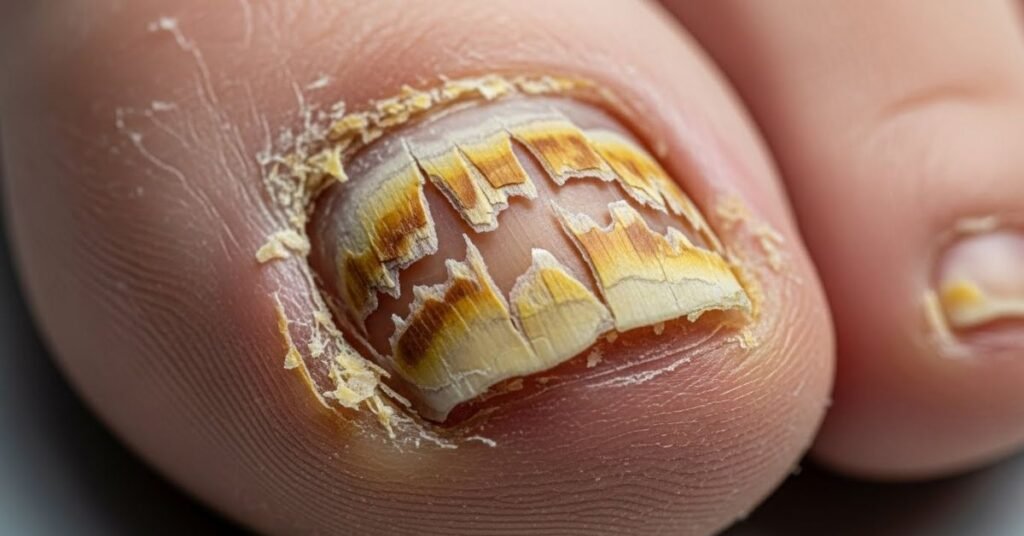
Severe Toenail Fungus (Stage 3)
In advanced stages, the nail may:
• Turn dark yellow, brown, or black
• Become crumbly
• Separate partially from the nail bed
• Cause pressure discomfort inside shoes
Debris may accumulate underneath, and secondary bacterial infections can occur if left untreated.
At this stage, treatment often requires a more structured approach.
Different Types of Toenail Fungus (Visual Differences)
Not all infections look the same.
White Superficial Onychomycosis
Powdery white patches on the surface. Often easier to treat when caught early.
Distal Subungual Onychomycosis (Most Common)
Starts at the tip. Yellowing and thickening progress inward.
Proximal Subungual Onychomycosis
Begins near the cuticle. Less common and sometimes associated with weakened immunity.
Understanding the pattern helps determine how early the infection is.
If you want a deeper breakdown of how infections evolve from early discoloration to structural nail damage, you may also find this stage-by-stage guide helpful:
👉 Toenail Fungus Stages: Early Signs, Progression & When to Treat
Who Is at Higher Risk?
Certain groups are more prone to fungal nail infections:
• Adults over 40
• People with athlete’s foot
• Diabetes patients
• Those with reduced circulation
• Frequent gym or pool users
Risk increases when nails remain damp for long periods.
Can Toenail Fungus Spread?
Yes.
It can spread:
• From one nail to another
• To the surrounding skin
• To fingernails
That’s why early identification matters.
Before choosing a treatment, it may help to understand which approaches are designed for early surface fungus versus more advanced nail thickening.
When Should You Start Treatment?
Consider treatment if:
• Discoloration doesn’t grow out
• Nail thickens progressively
• Infection spreads to other nails
• The nail becomes brittle or distorted
Not all topical options are formulated the same way. Some focus on basic antifungal agents, while others combine oils designed to penetrate the nail surface.
If you’re comparing approaches, this detailed treatment comparison may help you avoid trial-and-error:
👉 detailed treatment comparison
Comparing Treatment Options: What Should You Consider?
If you’re dealing with early surface fungus, addressing it sooner rather than later may help prevent deeper nail damage.
Mild cases may respond to consistent topical care. More advanced thickening may require stronger or combination approaches.
To see how one of the most discussed oil-based formulations compares to traditional OTC creams, read the full 2026 formulation analysis here:
FAQ – What Does Toenail Fungus Look Like?
What color is toenail fungus?
Most commonly yellow or white, but it may turn brown or black as it progresses.
Does it always thicken the nail?
Thickening usually develops over time, not immediately.
Can it hurt?
Early stages are usually painless. Pain may develop in severe cases.
Does it have a smell?
Advanced cases may produce odor due to debris buildup.
Can toenail fungus start as just one small spot?
Yes. Many infections begin as a small white or yellow mark that slowly spreads under the nail. Because growth is gradual, it may take weeks before the change becomes noticeable.
How can I tell if it’s fungus or just nail damage?
Fungal infections typically worsen over time, changing both color and thickness. Nail trauma, on the other hand, usually grows out normally without spreading to other nails.
Final Thoughts
Toenail fungus often starts small and painless — which is why many people delay action.
But once the nail becomes thickened and structurally damaged, treatment may take significantly longer.
Identifying early visual signs gives you the advantage.
Addressing it sooner rather than later can help reduce long-term nail damage and prevent spread.
Reviewed by Laura Collins
Editor & Lead Content Researcher at Nail Health Guide
Laura Collins reviews nail health content using a research-based approach focused on clarity, accuracy, and real-world relevance.
Learn more about Laura Collins