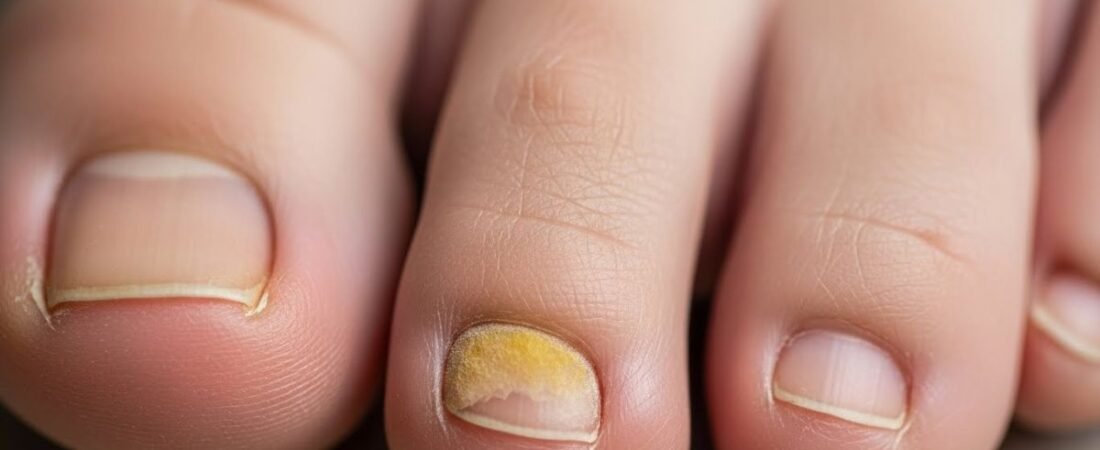
Toenail fungus in just one nail often begins with subtle changes — slight yellowing, thickening, or a brittle edge. Because it doesn’t look severe at first, many people delay treatment. Unfortunately, that delay is one of the main reasons the infection spreads to other nails.
While toenail fungus can affect multiple nails, it frequently starts with just one. Understanding why this happens — and what to do early — can save months of frustration and prevent long-term nail damage.
Why Toenail Fungus Can Start in Just One Nail
Toenail fungus (onychomycosis) enters through tiny openings in the nail or surrounding skin. When only one nail is affected, it’s usually because that nail was exposed to a specific trigger.
Minor Nail Trauma
Stubbing a toe, wearing tight shoes, or repeated pressure on a single nail can weaken its protective barrier. Once the nail is damaged, fungus can enter more easily.
Localized Moisture
Fungus thrives in warm, damp environments. If sweat or moisture gets trapped around one toe — especially inside tight shoes — that single nail can become the starting point.
Pedicures or Nail Salons
Poorly sanitized tools can introduce fungal spores to just one nail during a manicure or pedicure.
Pre-Existing Nail Conditions
Conditions like nail psoriasis or eczema may weaken one nail, making it more vulnerable than the others.
Risks of Ignoring a Single Nail Infection
Even if only one nail is affected, the risks shouldn’t be underestimated:
- Spread to other nails – fungus can move to adjacent nails over time
- Thickening and deformity – making the nail harder to trim
- Secondary infections – bacteria can enter through cracks or lifting
- Persistent odor or discomfort
Early action is the easiest way to prevent these complications.
What Toenail Fungus Looks Like in One Nail
A single-nail infection may cause:
- Yellow, brown, or white discoloration
- Nail thickening
- Brittle or crumbling edges
- Slight lifting from the nail bed
- Rough or chalky texture
If you’re unsure whether the changes are fungal, a visual guide can help:
👉 What Does Toenail Fungus Look Like? (Pictures & Early Signs)
Treatment Options for One Affected Nail
Even a single infected nail usually requires treatment.
At-Home Support
- Topical antifungal solutions
- Natural remedies (supportive, not standalone)
- Keeping nails clean, dry, and trimmed
👉 Learn more: How to Treat Toenail Fungus at Home
Professional Treatments
- Oral antifungal medication (for stubborn cases)
- Laser therapy in select situations
- Nail removal (rare and severe cases only)
Because toenails grow slowly, treatment often takes months — consistency matters more than speed.
Prevention Tips (After Treatment)
To avoid spread or reinfection:
- Wear breathable shoes and moisture-wicking socks
- Avoid walking barefoot in public showers or pools
- Sanitize nail tools regularly
- Keep nails short and clean
Small habits make a big difference over time.
When One Nail Isn’t the Whole Story
If you’re dealing with fungus in one nail, it’s important to know that early infections often look mild — even while fungal activity continues beneath the nail.
Because toenails grow slowly, visible improvement depends on addressing what’s happening under the nail, not just surface appearance. That’s why many people eventually look into topical options designed to support nail health over time and reduce the risk of spread.
One product often researched in this context is Kerassentials, which is why we’ve broken down how it works in a separate review.
👉 See if this type of treatment fits your stage of toenail fungus
Best Next Step
If you’ve noticed fungus in one nail and want to stop it before it spreads, early and consistent care is key. Rather than waiting for more nails to become affected, many people choose to learn about solutions designed specifically for persistent or early-stage nail concerns.
👉 View the full Kerassentials review and decide if it’s right for you
Final Thoughts
Toenail fungus affecting just one nail is more common than most people realize. While it may seem minor, ignoring it often leads to spread, thicker nails, and longer recovery times.
Catching it early — and choosing the right approach — can make all the difference.
Reviewed by Laura Collins
Editor & Lead Content Researcher at Nail Health Guide
Laura Collins reviews nail health content using a research-based approach focused on clarity, accuracy, and real-world relevance.
Learn more about Laura Collins