
Written by the Nail Health Guide Editorial Team Reviewed under the editorial direction of Laura Collins, Editorial Lead. This analysis is based on ingredient safety profiles, published dermatology research, and real user feedback patterns.
Affiliate Disclosure: This article contains affiliate links. If you purchase through our link, we may earn a commission at no additional cost to you. This does not influence our analysis.
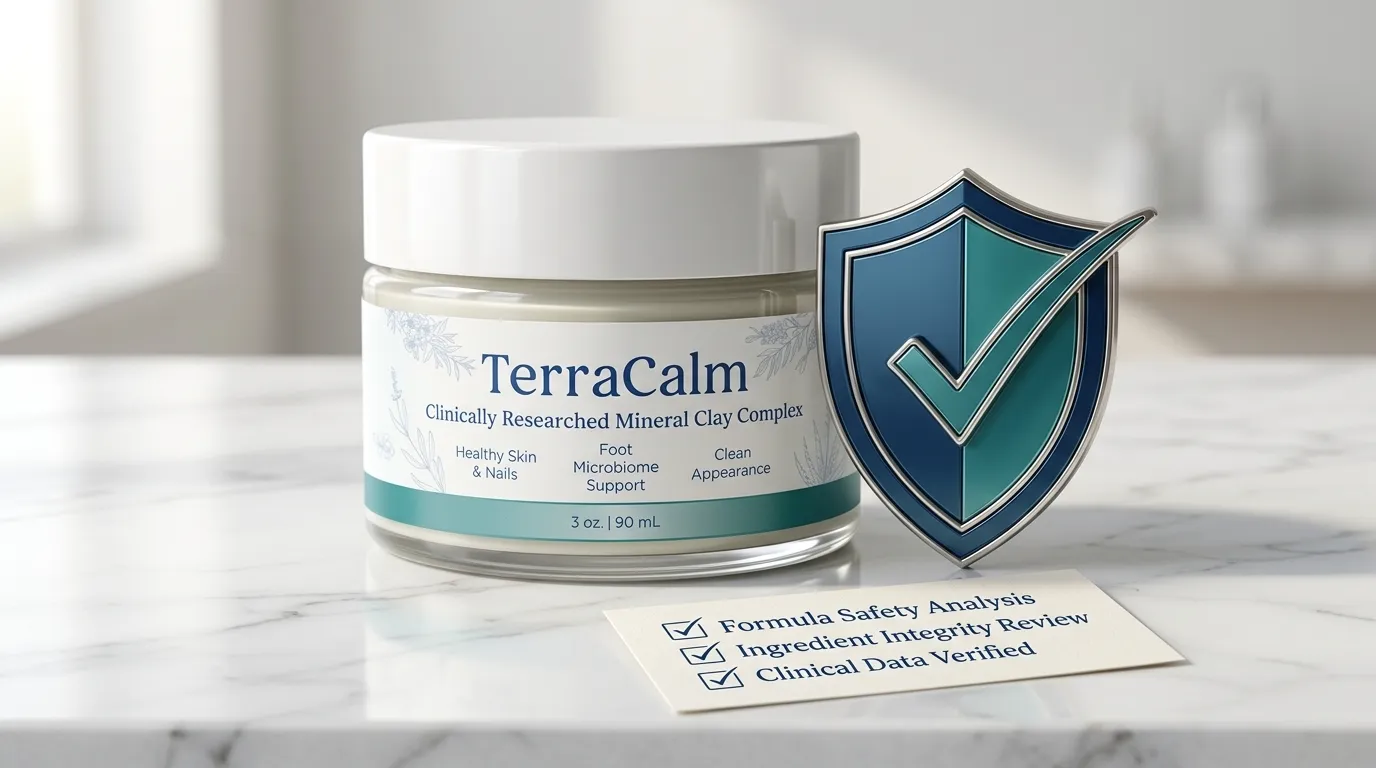
TerraCalm contains 16 active natural ingredients — including 6 essential oils, French Green Clay, and manuka honey. Before applying any multi-ingredient formula twice daily for several months, understanding its safety profile is a reasonable first step.
This article covers what side effects TerraCalm can realistically cause, which ingredients carry the most risk, who should be cautious, and how to use it safely.
Quick Answer: Is TerraCalm Safe?
For most users, yes — TerraCalm is considered safe for regular topical use.
The formula is manufactured in an FDA-registered, GMP-certified facility, uses 100% natural ingredients, and contains no harsh chemicals, synthetic antifungals, or stimulants. The topical cream format means the ingredients don’t pass through the digestive system or affect the liver.
There are no widespread reports of serious adverse effects. Side effects that do occur are typically mild, localized, and resolve after reducing or stopping use.
The main consideration: TerraCalm contains 6 essential oils — more than most comparable products. People with sensitive skin or known essential oil sensitivities have a higher chance of experiencing mild irritation than with simpler formulas.
Possible TerraCalm Side Effects
1. Mild Skin Irritation
The most likely side effect given the formula’s essential oil concentration. May present as:
- Redness or warmth around the nail or surrounding skin
- Mild burning or tingling immediately after application
- Slight itching at the application site
Who is most at risk: People with naturally reactive or sensitive skin, and anyone with existing irritation or broken skin around the nail.
What to do: If irritation occurs after the first few applications, reduce to once daily temporarily. If it persists after 5–7 days, discontinue and allow skin to recover. Restart with a patch test once the skin has healed.
Context: Some mild tingling from the essential oil blend in the first few applications is normal. Persistent burning or worsening redness is different and warrants stopping use.
2. Allergic Contact Dermatitis
A more significant reaction in people with specific sensitivities. Signs include:
- Redness spreading beyond the immediate application area
- Swelling around the nail or toe
- Blistering or weeping skin
- Intense itching that doesn’t resolve
Who is most at risk: People with known sensitivities to essential oils — particularly oregano, thyme, clove, or lavender. These are among the more common contact allergens in topical products.
What to do: Stop use immediately. Wash the area thoroughly with mild soap and water. If symptoms are severe or don’t improve within 24–48 hours, seek medical attention. A patch test before starting regular use identifies this sensitivity before it becomes a problem.
3. Clay Residue Sensitivity
Unique to TerraCalm’s cream format — some users experience mild dryness or tightness from the clay base, particularly on the skin surrounding the nail.
Why this happens: French Green Clay has natural absorbent properties — it draws moisture as part of its mechanism. On the nail surface this is beneficial. On already-dry surrounding skin, it can cause temporary dryness or tightness.
What to do: Apply a plain fragrance-free moisturizer to the surrounding skin after the TerraCalm has fully absorbed. Keep moisturizer off the nail itself during treatment.
4. Menthol Sensitivity
TerraCalm contains menthol, which produces a distinctive cooling sensation. Most users find this comfortable — but a small number with menthol sensitivity may find it irritating.
Who is most at risk: People with known menthol sensitivity or very reactive skin.
What to do: If the cooling sensation is uncomfortable rather than refreshing, apply a thinner layer and monitor. If irritation persists, this product may not be appropriate for your skin type.
5. Tree Nut Allergy Risk
TerraCalm contains sweet almond oil — derived from almonds, which are tree nuts.
Who is most at risk: People with tree nut allergies. The risk from topical application is lower than from ingestion, but individuals with severe tree nut allergies should consult their doctor before use.
What to do: Consult your healthcare provider before using if you have a known tree nut allergy.
Ingredient-by-Ingredient Safety Profile
| Ingredient | Safety Profile | Potential Issue |
|---|---|---|
| French Green Clay | Very safe — widely used in cosmetics | Temporary dryness in sensitive skin |
| Australian Tea Tree Oil | Generally safe | Contact dermatitis in sensitive individuals |
| Oregano Essential Oil | Use with caution — potent | Skin irritation — most reactive oil in formula |
| Thyme Essential Oil | Use with caution | Mild to moderate irritation in sensitive skin |
| Lavender Oil | Generally safe | Contact allergy in some individuals |
| Clove Bud Oil | Use with caution | Eugenol can cause irritation at higher concentrations |
| Cedarwood Oil | Generally safe | Rare sensitivity reactions |
| Bearberry Extract | Very safe | Essentially none at cosmetic concentrations |
| Manuka Honey | Very safe | Rare allergy in bee product-sensitive individuals |
| Sweet Almond Oil | Generally safe | Tree nut allergy risk |
| Jojoba Oil | Very safe | Essentially none |
| Shea Butter | Very safe | Rare sensitivity |
| Aloe Vera | Very safe | Rare reaction in latex-sensitive individuals |
| Vitamin E | Very safe | Rare contact allergy with prolonged use |
| Sunflower Oil | Very safe | Essentially none |
| Menthol | Generally safe | Sensitivity in reactive skin |
Highest-risk ingredients: Oregano, thyme, and clove essential oils — all are more potent than most essential oils and more likely to cause irritation in sensitive individuals. All three are present at cosmetic concentrations in TerraCalm, but people with reactive skin should patch test before starting.
TerraCalm vs Oral Antifungals: Safety Comparison
| TerraCalm (Topical) | Terbinafine (Oral) | Itraconazole (Oral) | |
|---|---|---|---|
| Liver impact | None — not ingested | Possible — monitoring recommended | Possible — monitoring recommended |
| Drug interactions | Minimal | Multiple documented | Significant interactions |
| Systemic side effects | Very low | Headache, GI issues, rare liver effects | Headache, GI issues, cardiac concerns |
| Skin irritation risk | Moderate — 6 essential oils | Low to moderate | Low to moderate |
| Requires medical supervision | No | Yes | Yes |
| Safe for long-term use | Generally yes | Limited duration | Limited duration |
TerraCalm’s higher skin irritation risk compared to oral antifungals is the tradeoff for having no systemic exposure. For people with sensitive skin, this means a patch test is especially important.
Who Should Be Cautious or Avoid TerraCalm
Use with caution if you have:
- Sensitive or reactive skin — patch test is essential before starting
- Known allergy to any essential oil in the formula — especially oregano, thyme, clove, or lavender
- Tree nut allergy — sweet almond oil is present
- Eczema or psoriasis on or near the application area
- Open wounds or broken skin around the nail
Consult a doctor before using if you:
- Have diabetes or poor peripheral circulation
- Have a compromised immune system
- Are pregnant or breastfeeding — essential oil safety during pregnancy requires medical guidance
- Are currently using prescription antifungal medications
Avoid if you:
- Have a known allergy to any listed ingredient
- Have a severe Stage 3 nail infection with significant pain, swelling, or signs of secondary bacterial infection — medical evaluation first
How to Use TerraCalm Safely
Step 1: Patch Test Before Starting
Apply a small amount to the inside of your wrist or elbow. Wait 24 hours. If no redness, itching, or swelling — proceed with regular use. Given the 6 essential oils in the formula, this step is more important for TerraCalm than for simpler products.
Step 2: Apply to Clean, Dry Nails
Wash and thoroughly dry feet before each application. The clay cream adheres better to dry surfaces — and wet skin increases irritation risk from the essential oil components.
Step 3: Apply a Thin, Even Layer
Use a small amount — enough to cover the nail surface and the skin immediately surrounding it. More is not better with essential oil-based products. Over-application increases irritation risk without improving results.
Step 4: Allow 3–5 Minutes to Absorb
Give the cream time to absorb before putting on socks or shoes. This prevents the formula from being wiped off and reduces the chance of essential oil contact spreading to other skin areas.
Step 5: Apply Consistently Twice Daily
Morning and night. The clay base needs regular contact to maintain antifungal activity. Consistency matters more than any other variable.
Step 6: Moisturize Surrounding Skin Separately
If dryness or tightness develops around the nail from the clay base, apply a plain fragrance-free moisturizer to the surrounding skin after TerraCalm has fully absorbed. Keep moisturizer off the nail itself.
When to Stop Using TerraCalm
Stop use immediately and consult a healthcare professional if you experience:
- Persistent redness or burning that doesn’t improve after 3–5 days
- Swelling around the nail or toe
- Blistering, weeping, or open skin
- Signs of allergic reaction — rash spreading beyond the application site
- Any worsening of existing nail or skin conditions
Mild tingling from the menthol and essential oils in the first few applications is not a reason to stop. Persistent or worsening reactions are.
FAQ — TerraCalm Side Effects
Is TerraCalm safe for sensitive skin? TerraCalm contains 6 essential oils — more than most comparable products. People with sensitive skin can use it, but a patch test before starting is strongly recommended. Reducing to once-daily application initially can also help reactive skin adjust.
Can TerraCalm cause an allergic reaction? Yes, though reactions are uncommon. The most likely triggers are oregano, thyme, clove, and lavender oils. A patch test before starting significantly reduces this risk.
Is TerraCalm safe for people with diabetes? People with diabetes should consult their doctor before starting any new topical foot treatment. Diabetes affects circulation and healing, and any foot product carries higher stakes for this population.
Does TerraCalm leave a residue? Yes — the clay base can leave a slight chalky residue after application. This is normal and not a safety concern. Applying at night before bed minimizes the practical impact during the day.
Can I use TerraCalm if I’m pregnant? Several essential oils in the formula — including clove and oregano — require caution during pregnancy. Consult your healthcare provider before use.
Is TerraCalm safe for children? The formula is designed for adults. The essential oil concentration makes it inappropriate for children without pediatric dermatologist guidance.
Final Verdict on Safety
TerraCalm has an acceptable safety profile for most healthy adults — but its 6-essential-oil formula means it carries more skin irritation risk than simpler products. The patch test step is more important here than with most comparable products.
People with reactive skin, known essential oil sensitivities, or tree nut allergies should approach with additional caution. For everyone else, consistent twice-daily use within the application guidelines presents minimal safety risk.
The topical format keeps systemic risk negligible — which remains the formula’s primary safety advantage over prescription oral antifungals.
👉 Check current TerraCalm pricing on the official website
Related Articles:
- TerraCalm Review 2026: Does It Work?
- TerraCalm Ingredients: Full Breakdown
- TerraCalm Scam or Legit?
- Where to Buy TerraCalm
- Best Toenail Fungus Treatment in 2026
Reviewed by Laura Collins — Editor & Lead Content Researcher at Nail Health Guide. Learn more about Laura Collins
⚠️ Medical Disclaimer: This content is for informational purposes only and does not constitute medical advice. Always consult a qualified healthcare professional before starting any new health product.
Affiliate Disclosure: This article contains affiliate links. We may earn a commission if you purchase through our link at no additional cost to you.