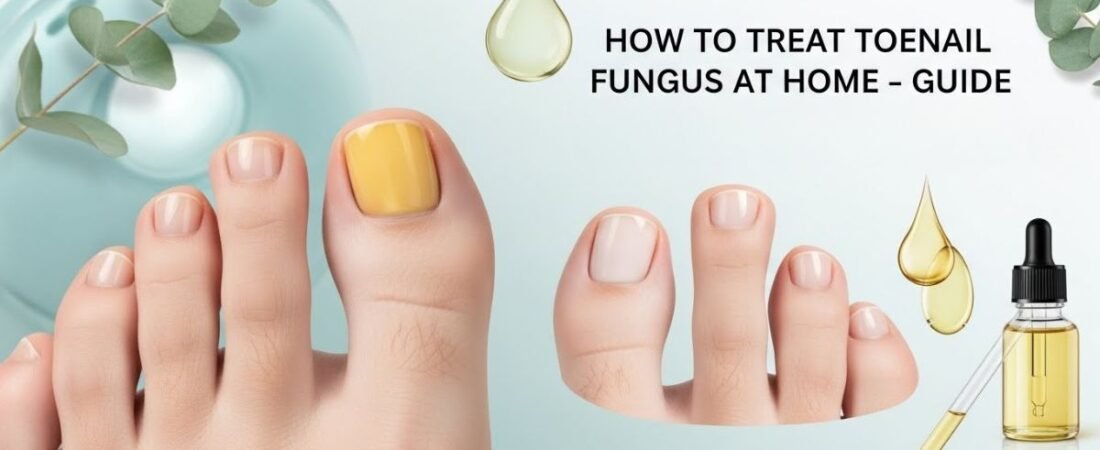
Toenail fungus is one of the most common foot problems — and unfortunately, one of the hardest to eliminate. While early symptoms may seem mild, untreated fungus can quickly spread, causing yellowing, thickening, odor, pain, and long-term nail damage.
The good news? Many cases can be treated at home using natural remedies, proper hygiene, and targeted topical solutions.
This guide explains exactly how to treat toenail fungus at home, what works, what to avoid, and the fastest way to restore clear, healthy nails.
What Causes Toenail Fungus (And Why It’s Hard to Treat)
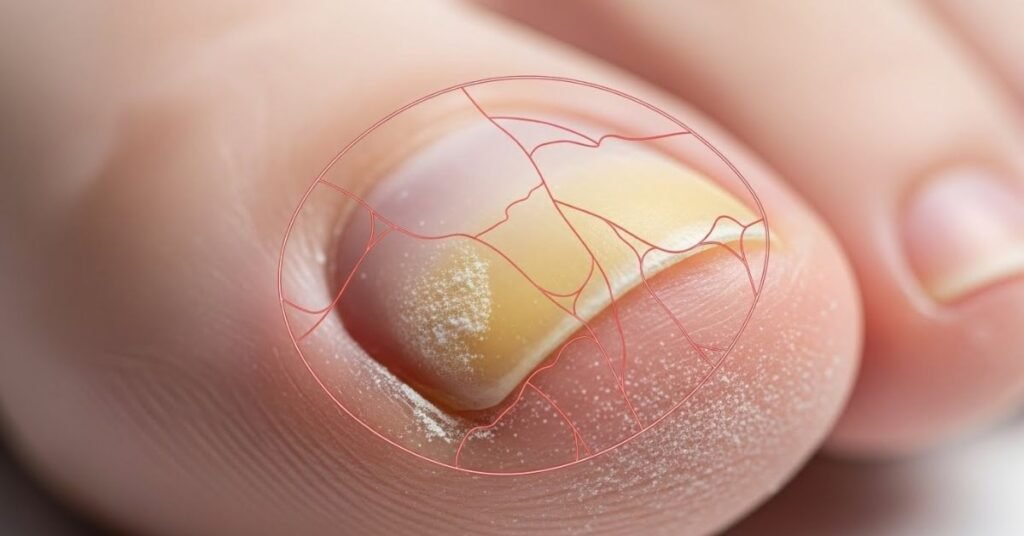
Toenail fungus — medically known as onychomycosis — develops when fungi invade the nail bed and thrive in warm, moist environments such as inside shoes.
The infection is stubborn because:
- Fungus lives under the nail, not just on the surface
- Nails grow slowly, so visible improvement takes time
- Daily moisture and sweat can worsen the infection
- Fungal spores spread easily between nails
Understanding these factors helps you choose the right home treatment — and avoid wasting time on ineffective methods.
Early Signs You Can Treat at Home
You can usually treat toenail fungus at home if you notice:
- Mild yellow or white spots
- Slight thickening
- Brittle or crumbly edges
- Minor discoloration
- No severe pain or swelling
If the nail becomes lifted, extremely thick, or painful, medical care may be necessary.
If you’re unsure whether your symptoms are early or advanced, see visual examples here:
👉 What Does Toenail Fungus Look Like? (Pictures & Early Signs)
Best Ways to Treat Toenail Fungus at Home
Below are the most effective at-home treatments, ranked by real-world effectiveness.
1. Use a Topical Antifungal Solution (Fastest & Most Effective)
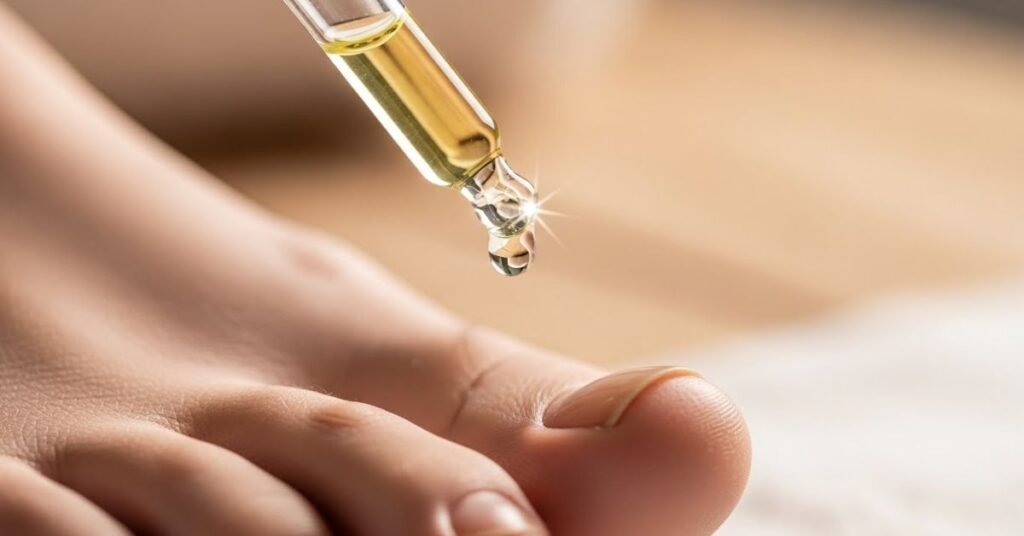
Topical antifungal formulas designed specifically for toenail fungus are the most reliable home treatment. They penetrate the nail and target fungus directly at the source.
Natural oils used alone are often too weak for deeper infections — which is why specialized formulas are recommended.
One of the most widely used options is Kerassentials, a natural antifungal solution made with potent plant-based oils.
Why many people choose Kerassentials:
- Designed specifically for stubborn nail fungus
- Uses science-backed oils like clove, tea tree, and lavender
- Helps reduce discoloration faster
- Supports healthy nail regrowth
- Safe for long-term daily use
👉 If your goal is clear, fungus-free nails, read the full breakdown here:
Kerassentials Review (2026): Can This Natural Oil Actually Stop Toenail Fungus From Spreading?
2. Tea Tree Oil (Good for Mild Cases)
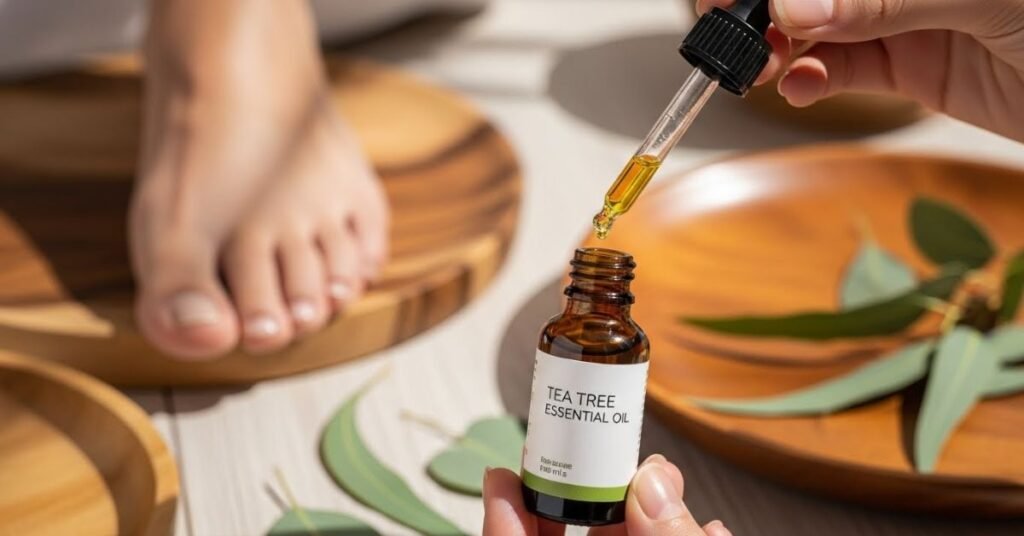
Tea tree oil has natural antifungal and antibacterial properties. It may help with very early or mild infections.
How to use:
- Apply 1–2 drops directly to the nail
- Spread using a cotton swab
- Use once or twice daily
Tea tree oil works best as a support, not a standalone cure for established fungus.
3. Apple Cider Vinegar Foot Soak
Apple cider vinegar (ACV) creates an acidic environment that may slow fungal growth.
Instructions:
- Mix equal parts ACV and warm water
- Soak feet for 15–20 minutes
- Dry feet thoroughly afterward
This can soften the nail and improve appearance, but won’t eliminate moderate infections on its own.
4. Baking Soda Paste
Baking soda does not kill fungus, but it can reduce odor and surface discoloration.
How to use:
- Mix baking soda with a few drops of water
- Apply paste to the nail
- Leave for 10 minutes, then rinse and dry
Use only as a supporting method, not a main treatment.
5. Hydrogen Peroxide Soak
Hydrogen peroxide can help clean the nail surface and reduce debris caused by fungus.
Steps:
- Mix 1 part peroxide with 1 part warm water
- Soak for 10–15 minutes
- Dry feet completely
Helpful for hygiene, but not strong enough to eliminate fungus deeply.
Daily Routine to Speed Up Results (Very Important)
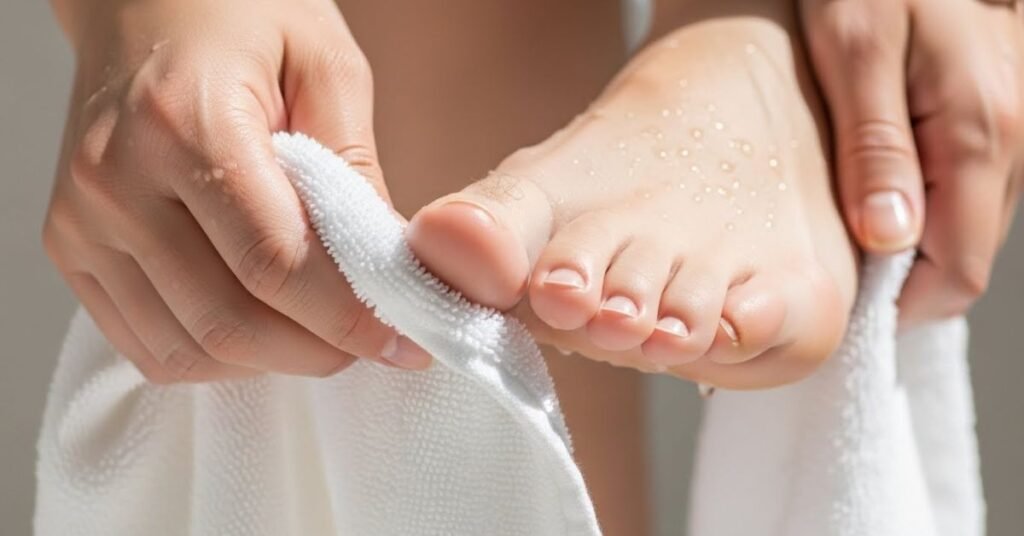
Home treatment works best when combined with consistent daily habits.
Daily steps:
✔ Wash and thoroughly dry your feet
✔ Keep nails trimmed and filed
✔ Change socks daily
✔ Wear breathable footwear
✔ Rotate shoes to prevent moisture buildup
✔ Disinfect nail tools after each use
✔ Use antifungal foot powder if your feet sweat
These habits help prevent fungus from spreading to other nails.
What Not to Do When Treating Toenail Fungus
Avoid these common mistakes:
❌ Ignoring early symptoms
❌ Covering infected nails with polish
❌ Sharing nail tools
❌ Wearing damp shoes
❌ Stopping treatment too soon
Toenail fungus often returns when treatment is stopped early.
To understand why recurrence happens, read:
👉 Why Toenail Fungus Keeps Coming Back (And How to Finally Stop It)
When You Should See a Doctor
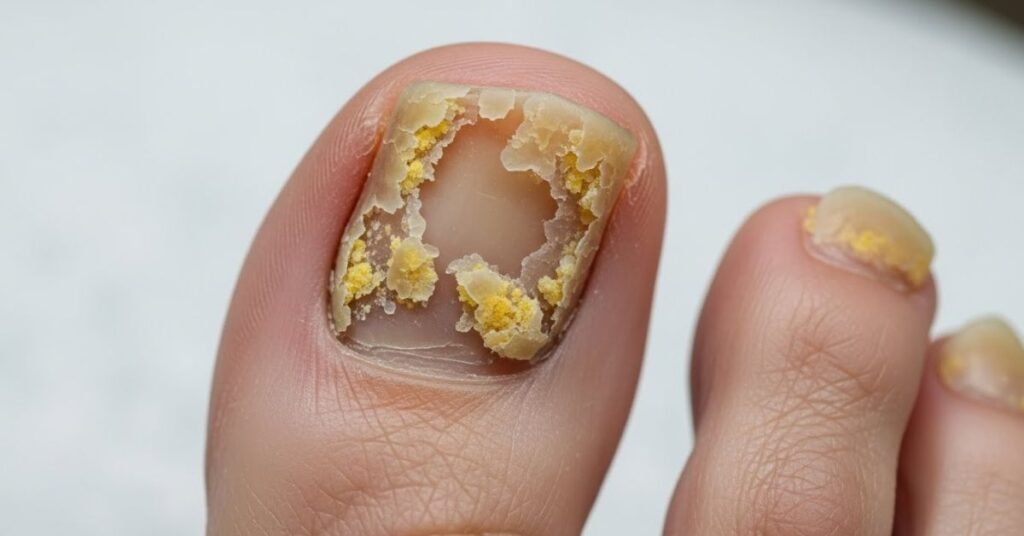
Seek medical advice if you experience:
- Severe pain
- Signs of bacterial infection
- Nail separating from the nail bed
- Rapidly worsening symptoms
- Recurring infections
- Diabetes or circulation issues
Not sure how advanced your infection is?
👉 Toenail Fungus Stages: How to Tell If It’s Early, Progressing, or Already Advanced
Best Next Step for Home Treatment (If You Want Real Results)
Most home remedies improve appearance — but don’t eliminate fungus at the root.
If you want a treatment that:
✔ Targets fungus deeply
✔ Improves nail color and texture
✔ Helps prevent recurrence
✔ Avoids harsh chemicals
…then a specialized topical antifungal solution is the best option.
👉 If you’re comparing at-home treatments and want to understand how an oil-based formula differs from creams and DIY remedies, read:
Kerassentials Review (2026): Ingredients, Results & Who It’s Best For
Summary & Final Tips
Toenail fungus is frustrating — but treatable with the right at-home approach.
Remember:
✔ Early symptoms respond well to home treatment
✔ Natural remedies help, but often work slowly
✔ A dedicated antifungal formula works fastest
✔ Daily consistency is key
✔ Keep feet clean, dry, and protected
✔ Seek medical help if symptoms worsen
👉 Ready to take the next step?
See the full Kerassentials Review to decide if it’s right for you.
Reviewed by Laura Collins
Editor & Lead Content Researcher at Nail Health Guide
Laura Collins reviews nail health content using a research-based approach focused on clarity, accuracy, and real-world relevance.
Learn more about Laura Collins