
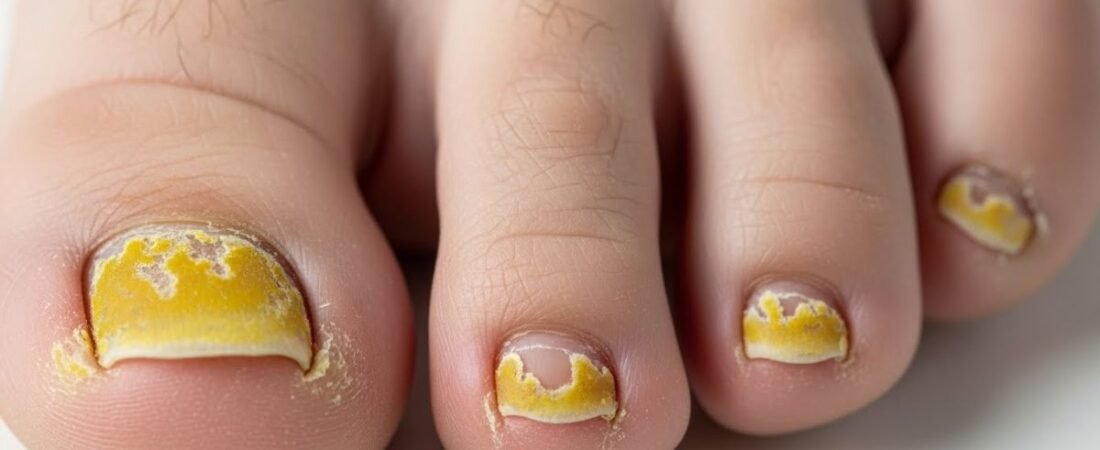
Toenail fungus often starts in just one nail, but without proper care, it can quietly spread to others. Many people try basic hygiene fixes and assume the infection is under control — only to notice more nails changing color or thickening over time.
Understanding why toenail fungus keeps spreading is the key to stopping it before it affects all your nails.
How Toenail Fungus Spreads Between Nails
Fungal infections spread through microscopic spores that move easily in everyday environments. Once the fungus is established, it doesn’t stay confined to a single nail for long.
Direct Nail Contact
Inside tight shoes, nails frequently touch each other. This creates a direct path for the fungus to move from one nail to the next.
Contaminated Items
Nail clippers, socks, towels, and even shoes can carry fungal spores. Reusing these items without proper cleaning allows reinfection to happen repeatedly.
Moist Conditions
Fungus thrives in warm, damp environments. Sweaty feet, damp socks, and poorly ventilated shoes create ideal conditions for spread.
Why the Infection Keeps Coming Back or Getting Worse
Many people focus only on surface-level fixes, which often aren’t enough.
Common reasons the fungus keeps spreading include:
- Treating symptoms instead of the root cause
- Stopping treatment too early when the nail looks slightly better
- Relying on hygiene alone without antifungal support
- Ignoring slow nail growth, which delays visible improvement
Even if one nail seems better, fungal spores may still be active underneath or on nearby nails.
How Fast Can Toenail Fungus Spread?
Without proper treatment, toenail fungus can spread over weeks or months. Because toenails grow slowly, the damage often becomes noticeable only after multiple nails are already involved.
This delay is why many people feel like the infection “suddenly got worse,” when in reality it was progressing quietly.
How to Stop Toenail Fungus From Spreading
What Helps (But Often Isn’t Enough Alone)
- Keeping feet clean and dry
- Trimming nails properly
- Wearing breathable shoes
These steps reduce risk but do not eliminate an active infection.
What Actually Stops the Spread
Consistent antifungal treatment that targets the infection at its source is what prevents the fungus from moving to healthy nails. The earlier this happens, the easier it is to protect unaffected nails and support healthy regrowth.
Some treatments are designed to work only on the surface, while others are formulated to penetrate the nail and address the infection underneath.
If you’re trying to understand the difference — and why that matters for stopping the spread — this breakdown explains it clearly:
👉 Learn how antifungal treatments work beneath the nail
When Basic Care Isn’t Enough
When toenail fungus starts spreading, it’s usually a sign that hygiene alone can no longer control the infection.
Many people only begin to see real improvement after switching to a treatment approach designed to reach the fungus beneath the nail — where spores continue to survive and spread.
👉 See which treatment approach is designed for deeper nail infections
Final Thoughts
Toenail fungus keeps spreading because it’s often underestimated and under-treated. While hygiene helps reduce risk, it rarely stops an active infection on its own.
If more nails are becoming affected, that’s usually a sign the fungus is still active beneath the surface. At that stage, using a treatment designed to target the infection at its source may help stop further spread and support healthier nail regrowth.
👉 Read the full treatment review to see how this approach works
Reviewed by Laura Collins
Editor & Lead Content Researcher at Nail Health Guide
Laura Collins reviews nail health content using a research-based approach focused on clarity, accuracy, and real-world relevance.
Learn more about Laura Collins