Toenail fungus often starts as a small cosmetic issue — a slight discoloration or thickening. But in many cases, it doesn’t stay that way. Certain habits and environmental factors can quietly make the infection worse over time.
Understanding what worsens toenail fungus is essential if you want to slow its progression, avoid spreading, and protect long-term nail health.
Why Toenail Fungus Tends to Get Worse Over Time
Fungus thrives in warm, moist environments. Combined with the fact that toenails grow very slowly, this allows fungal activity to continue beneath the nail long before changes become obvious.
This means everyday habits — even small ones — can strongly influence how fast the infection progresses.
Habits and Factors That Make Toenail Fungus Worse
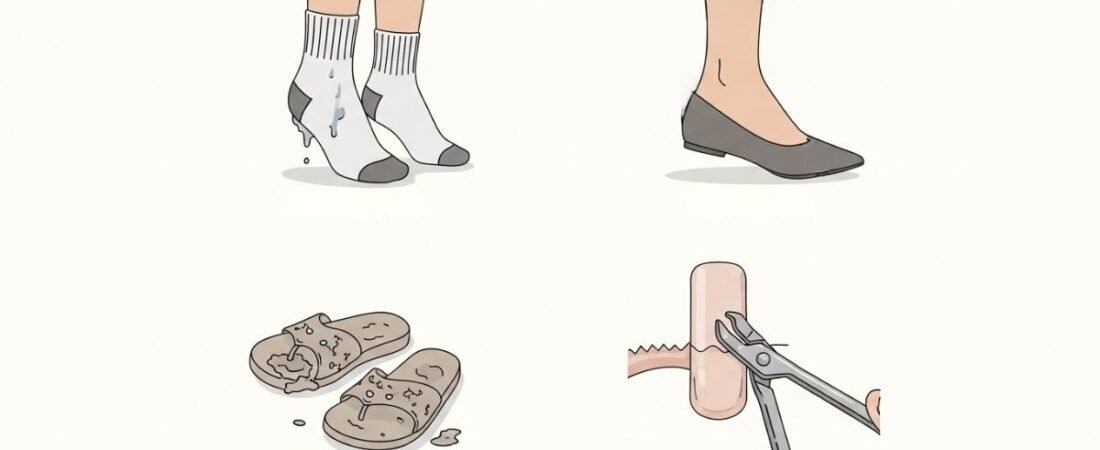
Moisture and Poor Airflow
Excess moisture is one of the biggest contributors to worsening toenail fungus.
Common sources include:
- Sweaty feet
- Damp socks
- Not drying feet thoroughly after bathing
Moist environments allow fungal organisms to grow and spread more easily.
What helps:
Dry feet completely, change socks daily, and let shoes air out between uses.
Tight Shoes and Synthetic Socks
Tight footwear reduces airflow and increases pressure on the nail. Synthetic socks can trap heat and moisture.
Together, these conditions make it easier for fungus to spread beneath the nail plate.
What helps:
Choose breathable shoes and moisture-wicking socks whenever possible.
Inconsistent or Interrupted Treatment
Skipping applications or stopping treatment early is a common reason toenail fungus worsens.
Even if the nail looks better, fungal spores may still be active underneath. Inconsistent treatment gives them time to recover and spread.
What helps:
Stick to a regular routine and continue treatment long enough to support healthy nail regrowth.
Nail Trauma and Unsanitary Pedicures
Minor injuries, aggressive trimming, or improperly cleaned pedicure tools can damage the nail barrier.
This creates openings that make fungal infections easier to worsen or spread.
What helps:
Trim nails gently and ensure any salon tools are properly disinfected.
Sharing Footwear or Nail Tools
Fungal spores can live on shoes, socks, files, and clippers.
Sharing these items can reinfect treated nails or spread fungus to new ones.
What helps:
Use personal nail tools only and avoid sharing footwear.
Ignoring Early Symptoms
Early-stage toenail fungus often looks mild, which causes many people to delay action.
Unfortunately, waiting allows the infection to move deeper into the nail, making it harder to manage later.
Early attention often prevents progression.
How to Prevent Toenail Fungus From Getting Worse
Slowing or stopping progression usually comes down to consistent habits:
- Keep feet clean and fully dry
- Wear breathable shoes and socks
- Practice proper nail hygiene
- Stay consistent with treatment
- Avoid known triggers
When these habits are neglected, toenail fungus is far more likely to worsen or return.
Bridge: Why Habit Changes Alone Aren’t Always Enough
While better foot care plays a major role, many people discover that habits alone don’t fully stop fungal activity once it’s established beneath the nail.
Because toenails grow slowly, lasting improvement often depends on supporting the nail environment consistently over time — not just avoiding triggers.
That’s why many readers begin researching topical options designed for long-term nail support, especially in recurring or worsening cases.
One product often mentioned in this context is Kerassentials, which is why we’ve analyzed how it works, what it’s designed to support, and who it may be most suitable for.
👉 Read the full Kerassentials review to see if it fits your situation
Final Notes
Toenail fungus doesn’t worsen randomly. It usually progresses because of:
- moisture and poor airflow
- repeated nail damage
- inconsistent treatment
- delayed action
By identifying and correcting these factors — and supporting nail health consistently — many people slow progression and protect healthier regrowth over time.
Reviewed by Laura Collins
Editor & Lead Content Researcher at Nail Health Guide
Laura Collins reviews nail health content using a research-based approach focused on clarity, accuracy, and real-world relevance.
Learn more about Laura Collins