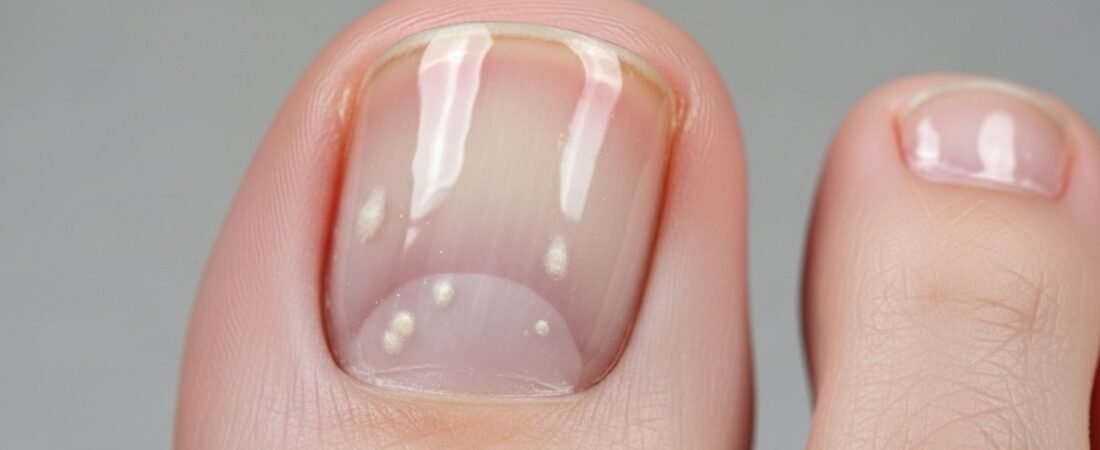
If you’ve noticed dark spots or thickened edges under nail polish that don’t go away after removing the polish, you’re not alone. Many people assume nail fungus hides harmlessly beneath color — but in some cases, it can silently get worse over time and lead to more noticeable symptoms.
Toenail fungus isn’t just cosmetic: it affects the structure of the nail plate and surrounding skin. Understanding what’s happening under nail polish can help you decide what steps to take next.
What Toenail Fungus Is
Onychomycosis (fungal nail infection) is a common nail disorder caused by dermatophytes, yeasts, or molds. According to the American Academy of Dermatology, these organisms thrive in warm, moist environments and can invade the nail bed and plate through tiny cracks.1
Fungus doesn’t stop at the surface — it can gradually break down the keratin that makes up your nail, leading to discoloration, thickening, and separation from the nail bed.
Can Nail Polish Make Fungus Worse?
Nail polish itself doesn’t directly cause fungus, but it can create conditions where fungal infection progresses more quickly.
How Fungus Behaves Under Polish
When polish traps moisture or doesn’t allow air exchange, it can create a humid micro-environment. Fungi love humidity and can multiply faster in enclosed spaces.
This doesn’t mean every polish leads to worsening infections — but if you already have a fungal colonization, continually sealing the nail can make it harder to eradicate.
Warning Signs It’s Getting Worse
Signs that a possible fungal infection may be deepening include:
- Thickening of the nail plate
- Nails lifting off the nail bed
- Yellow, brown, or whitish discoloration
- Brittleness or crumbling edges
If these happen while you’re wearing or removing polish frequently, it’s worth paying attention.
Traditional OTC Treatments — Limitations & Frustrations
Over-the-counter antifungal creams and lacquers are commonly recommended first. But one common frustration with standard antifungal treatments is that they may not fully penetrate the nail surface — especially when the fungus is under the polish layer. That’s why consistency — and sometimes alternative formulations — become important.
Dermatologists often note that nail plate penetration is one of the biggest challenges with topical therapy. This can lead to inconsistent results and slow improvement, prompting many people to switch approaches before seeing meaningful changes.
If you’re unsure whether the changes you’re seeing under nail polish are early fungal signs or something else, you may want to compare visual examples here:
👉What Does Toenail Fungus Look Like? (Pictures & Early Signs)
How Doctors Diagnose Fungal Infections
Health care providers often take a sample of nail clippings to confirm fungus under a microscope or culture test. This helps distinguish fungal infection from psoriasis, trauma-related changes, or other nail disorders.
A confirmed diagnosis can guide treatment options and expectations.
Who Is at Higher Risk?
Certain factors raise the likelihood of fungal nail problems:
- History of athlete’s foot
- Poor foot hygiene
- Wearing damp socks or tight shoes
- Diabetes or circulation issues
- Older age
If you have one or more of these, nail fungus under polish may progress more readily.
When to See a Healthcare Provider
Seek professional evaluation if:
- Symptoms persist beyond a few weeks
- Pain or swelling develops
- The infection seems to spread to other nails
- You have underlying health conditions (e.g., diabetes)
Before choosing a treatment, it may help to understand which approaches are designed for early surface fungus versus more advanced nail thickening.
Comparing Treatment Approaches
There are multiple approaches to addressing fungal nail issues:
- Daily antifungal creams
- Medicated lacquers
- Oral antifungal prescriptions
- Oil-based solutions formulated for penetration
Each has pros and cons depending on severity and patient goals.
Some focus only on surface treatment, while others are designed to work with the nail’s structure itself.
If you’re comparing approaches, this detailed breakdown may help you avoid trial-and-error:
👉 Read the Kerassentials Review: Does It Really Work for Toenail Fungus?
Comparing Treatment Options: What Should You Consider?
If you’re dealing with early surface fungus, addressing it sooner rather than later may help prevent deeper nail damage. Effective treatment depends on choosing a formulation that reaches the infection site and supports the natural environment of the toenail.
To see how one of the most discussed oil-based formulations compares to traditional OTC creams, read the full 2026 analysis here:
👉read the full 2026 analysis her
FAQs
Q: Can nail polish hide fungal infection?
A: It can mask visible discoloration but doesn’t eliminate the fungus underneath.
Q: Is fungus worse under acrylics or polish?
A: Any occlusive covering can trap moisture; the key is hygiene and removing polish to assess the nail.
Q: Should I stop wearing polish entirely with fungus?
A: Temporarily removing polish allows better treatment access and monitoring.
Reviewed by Laura Collins
Editor & Lead Content Researcher at Nail Health Guide
Laura Collins reviews nail health content using a research-based approach focused on clarity, accuracy, and real-world relevance.
Learn more about Laura Collins