
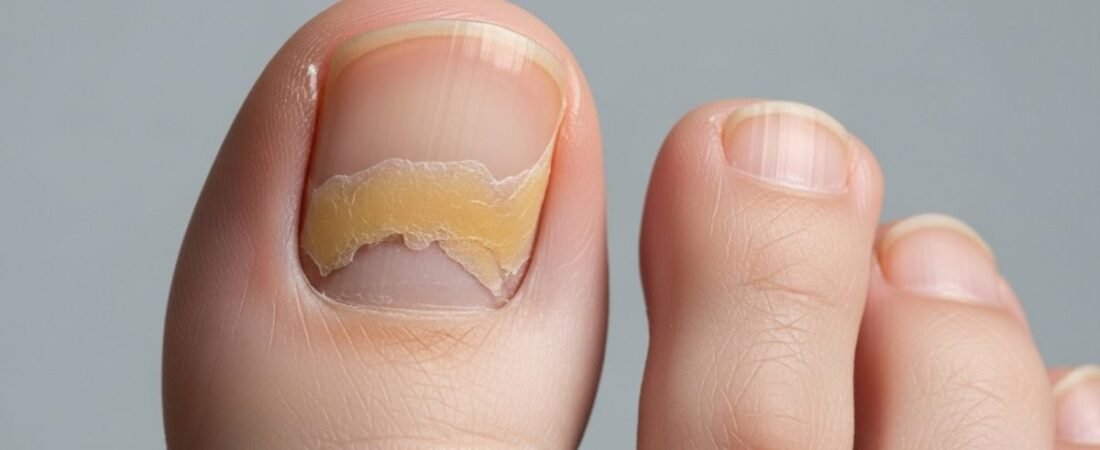
Toenail fungus doesn’t just change the color of the nail — over time, it can alter the entire nail structure. Understanding how these changes happen helps prevent misdiagnosis and explains why early treatment is so important.
This article explains what happens inside the nail as a fungal infection progresses and how those structural changes relate to different stages of toenail fungus.
How Toenail Fungus Affects the Nail From the Inside
Toenail fungus begins when microscopic fungi enter through small cracks between the nail plate and nail bed. Once inside, the fungi feed on keratin — the protein that gives nails their strength.
As the infection develops, the nail’s natural growth cycle becomes disrupted. Instead of growing smoothly and evenly, the nail starts to change in texture, thickness, and attachment to the nail bed.
These internal changes often occur before severe symptoms are visible, which is why early fungal infections are frequently overlooked.
Structural Changes by Stage of Toenail Fungus
Early Stage: Subtle Surface Changes
In early toenail fungus, structural damage is minimal but beginning.
Common changes include:
- Slight softening of the nail plate
- Loss of natural shine
- Mild separation at the nail edge
At this stage, many people confuse fungus with cosmetic damage. You can compare these early signs in detail here:
👉 Early vs Advanced Toenail Fungus
Moderate Stage: Thickening and Nail Deformation
As the fungus spreads deeper, it interferes more aggressively with keratin production.
Structural changes may include:
- Noticeable nail thickening
- Brittle or crumbly texture
- Uneven nail growth
- Yellow or white discoloration spreading inward
The nail may begin lifting from the nail bed (onycholysis), creating spaces where moisture and fungi thrive. These changes align with the middle phases described in:
👉 Stages of Toenail Fungus
Advanced Stage: Severe Structural Breakdown
In advanced cases, the nail structure may be significantly compromised.
Possible changes include:
- Extreme thickening and distortion
- Pain when wearing shoes
- Partial or full nail detachment
- Secondary bacterial infections
At this stage, nail growth often slows dramatically, making recovery more challenging.
Simplified Physiology: Why the Nail Keeps Changing
Toenails grow slowly — typically 1–2 mm per month. When fungi disrupt the nail matrix (the growth center), damaged keratin continues forming until healthy growth fully replaces it.
This is why:
- Structural damage lingers even after fungus is controlled
- Nails may look worse before they look better
- Healing takes months, not weeks
How Structural Damage Affects Healing Time
The more the nail structure is altered, the longer recovery usually takes. Thickened or lifted nails create environments where fungus can persist, slowing visible improvement.
This relationship between damage and recovery is explored further in:
👉 Stages of Healing Toenail Fungus
When to Seek Medical Advice
Consider professional evaluation if:
- The nail becomes painful or swollen
- The nail detaches significantly
- Multiple nails are affected
- You have diabetes or circulation issues
A healthcare provider can confirm whether structural changes are fungal or caused by trauma or other nail disorders.
FAQ: Nail Structure and Toenail Fungus
Does toenail fungus permanently damage the nail?
In many cases, damage is reversible once healthy nail growth replaces the infected portion, though severe cases may take longer.
Why does the nail get thicker with fungus?
Fungal activity disrupts normal keratin formation, causing irregular buildup.
Can nail structure improve without treatment?
Structural changes usually persist or worsen without addressing the underlying infection.
Learn More About Toenail Fungus Progression
For a complete overview of causes, symptoms, stages, and treatment approaches, visit the pillar guide:
👉 Toenail Fungus: Causes, Symptoms, Stages & Treatment