
Written by the Nail Health Guide Editorial Team | Updated August 2026 | 6 min read
Affiliate disclosure: This page contains affiliate links — we may earn a commission at no extra cost to you. Medical disclaimer: Not medical advice; consult your doctor before starting any new treatment.
Quick Summary
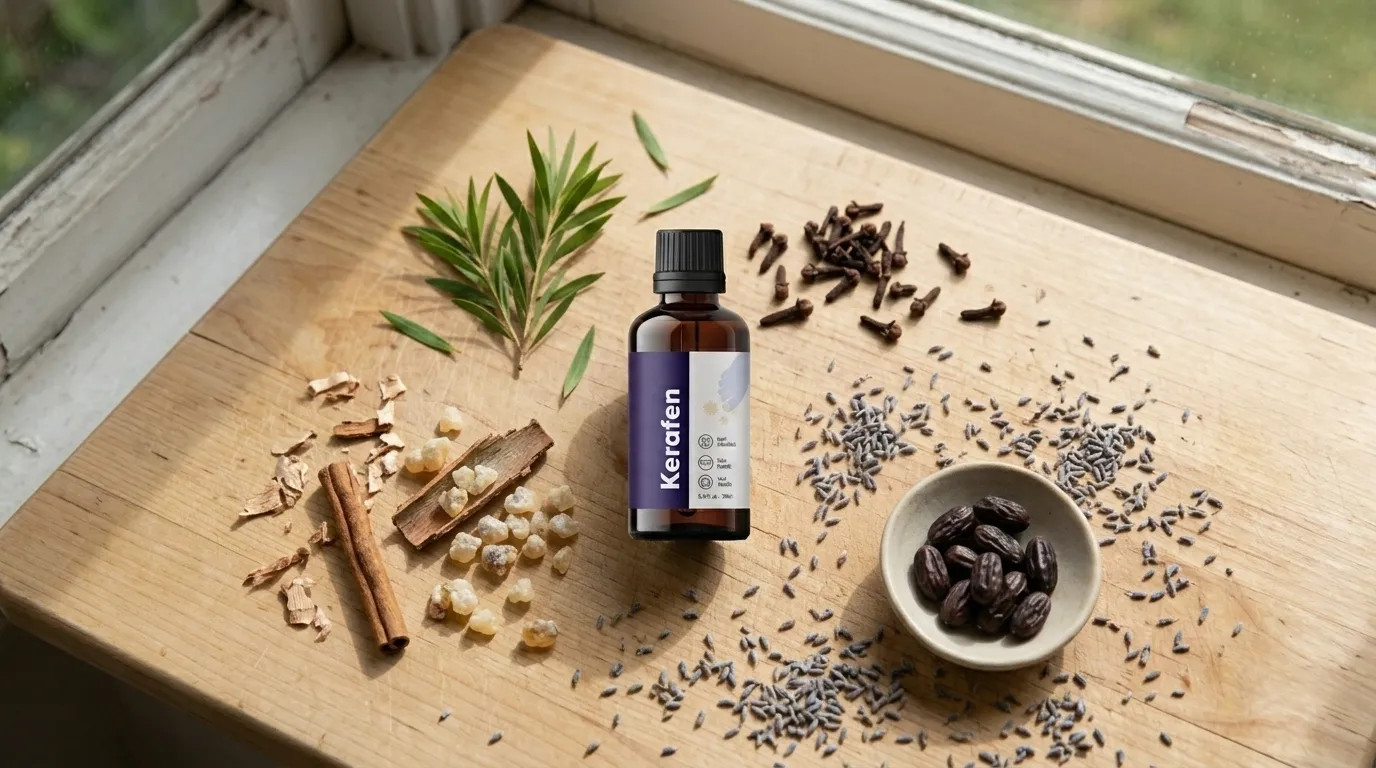
Kerafen is a topical antifungal oil built around 15 natural ingredients, led by undecylenic acid — an FDA-recognized topical antifungal — and a blend of essential and carrier oils including tea tree, camphor, clove bud, and lavender. Here’s what each ingredient actually does, and where the marketing claims outpace the evidence.
See the Full Ingredient List — Official Site →
At a Glance
| Product | Kerafen |
| Total ingredients | 15 |
| Direct antifungal ingredients | 5 of 15 (undecylenic acid, tea tree, manuka, clove, lemongrass) |
| Primary active | Undecylenic acid — FDA-recognized |
| Allergy notes | Contains almond oil and walnut oil (tree nut allergy risk) |
For our full product breakdown, see the Kerafen Review.
Before applying any topical treatment to your skin or nails, it’s worth understanding exactly what’s in it — not just the marketing description, but what each ingredient is actually known for. Here’s our ingredient-by-ingredient breakdown of Kerafen.
The Full Ingredient List
- Undecylenic Acid
- Tea Tree Essential Oil (Melaleuca Alternifolia)
- Camphor Oil (Cinnamomum Camphora)
- Jojoba Oil (Simmondsia Chinensis)
- Clove Bud Essential Oil (Syzygium Aromaticum)
- Chia Oil (Salvia Hispanica)
- Manuka Oil (Leptospermum Scoparium)
- Lemongrass Oil (Cymbopogon)
- Lavender 40/42 Essential Oil
- Organic Flaxseed Oil
- Aloe Vera
- Vitamin E
- Sweet Almond Oil
- Menthol
- Walnut Oil
According to manufacturer claims, it’s produced in an FDA-registered, GMP-certified US facility.
Ingredients & What the Evidence Shows
A fatty acid, commonly derived from castor oil, and one of the few natural-origin compounds recognized as an OTC antifungal active ingredient. Genuinely established, not novel or unproven.
Contains terpinen-4-ol, one of the most studied natural compounds for antifungal activity against dermatophytes — the fungus family responsible for most nail infections.
Traditionally valued for its cooling sensation and mild antimicrobial associations — likely serving both sensory and mild supporting roles here.
Contains eugenol, found in various studies to have antifungal and analgesic properties. Also contributes to the formula’s strong scent.
An essential oil native to New Zealand, in the same botanical family as tea tree oil, with broadly similar antimicrobial associations.
Contains citral, studied for antifungal properties in various essential oil research contexts, though less extensively than tea tree oil.
Primarily included for anti-inflammatory and calming properties — helps reduce redness given how many other essential oils are in this formula.
Conditioning carrier oils, rich in omega-3s, supporting nail and skin moisture and helping other ingredients absorb — not primary antifungal agents.
Aloe vera soothes irritation from the concentrated essential oil blend; Vitamin E is an antioxidant supporting tissue protection; menthol provides the cooling sensation after application.
Conditioning carrier oils. Note: both are relevant for anyone with a tree nut allergy.
Check Current Pricing and Package Options →
The Pattern Worth Noticing
Of the 15 ingredients, only a handful have a well-established, direct antifungal association: undecylenic acid (the strongest), tea tree oil, manuka oil, clove bud oil, and lemongrass oil to a lesser extent. The remaining ingredients — jojoba, chia, flaxseed, almond, walnut, aloe vera, vitamin E, and menthol — serve conditioning, soothing, or sensory roles rather than direct antifungal ones.
This is a fairly typical composition for products in this category: one or two genuinely active antifungal ingredients, supported by a larger blend of conditioning and sensory oils. It doesn’t mean the supporting ingredients are useless — nail and skin conditioning does matter for overall treatment comfort and consistency — but it’s worth knowing which ingredients are doing the antifungal work and which are there for texture, scent, and comfort.
✅ Key Takeaway
5 of 15 ingredients do direct antifungal work; the other 10 support penetration, conditioning, or comfort. That’s a normal ratio for this product category — not a red flag on its own.
About the “Biofilm-Disrupting” Claim
Kerafen’s marketing associates several ingredients (particularly camphor, jojoba, chia, and clove) with disrupting the protective “biofilm” that nail fungus can form. The general concept — that microbial biofilms increase resistance to treatment — is a real, studied phenomenon in microbiology.
Allergy and Sensitivity Considerations
| Ingredient | Consideration |
|---|---|
| Sweet Almond Oil | Tree nut allergy risk |
| Walnut Oil | Tree nut allergy risk |
| Clove Bud Oil | Can cause skin sensitivity in concentrated form |
| Camphor Oil | Can cause skin sensitivity, especially in children or sensitive skin |
| Lavender, Tea Tree, Manuka, Lemongrass | Standard essential oil sensitivity risk — patch test recommended |
A patch test on a small area of skin 24 hours before full application is a reasonable precaution given how many essential oils are concentrated in this formula.
👉 For the complete safety picture, see our Kerafen Side Effects guide.
FAQ
What is the main active ingredient in Kerafen? Undecylenic acid — an FDA-recognized topical antifungal fatty acid. It’s the ingredient with the strongest, most established antifungal evidence in the formula.
Does Kerafen contain any allergens? Yes — sweet almond oil and walnut oil are both present, which is relevant for anyone with a tree nut allergy.
Are all 15 ingredients antifungal? No. Only a handful (undecylenic acid, tea tree oil, manuka oil, clove bud oil, and to a lesser extent lemongrass oil) have a direct antifungal association. The rest serve conditioning, soothing, or sensory roles.
Does the “biofilm” claim hold up? The general biofilm concept is real microbiology, but the specific claim that this formula disrupts biofilm on nail fungus hasn’t been independently verified for the finished product. Treat it as marketing built on real science, not a proven mechanism.
Is Kerafen’s ingredient list safe? Generally yes for most people, with the caveats above regarding tree nut allergies and essential oil sensitivity. A patch test is a reasonable precaution.
Final Assessment
Kerafen’s ingredient list is anchored by a genuinely established antifungal (undecylenic acid), supported by a broad blend of essential oils with real, if secondary, antifungal associations, and conditioning ingredients that support comfort and consistency of use. The “biofilm-disrupting” marketing language is built on real science but goes beyond what’s independently verified for this exact formula.
🦶 Check Current Kerafen Pricing
Anchored by an FDA-recognized antifungal, with the broadest essential oil blend we’ve reviewed.
Check Pricing — Official Website →
Laura Collins
Editorial direction for Nail Health Guide. Every ingredient was cross-referenced against published research and manufacturer claims before publishing.
Continue reading:
- 👉 Full Kerafen Review
- 👉 Kerafen Scam or Legit?
- 👉 Kerafen Side Effects: Is It Safe?
- 👉 Where to Buy Kerafen
- 👉 Best Toenail Fungus Treatment in 2026
⚠️ Medical Disclaimer: This content is for informational purposes only and is not intended as medical advice. Always consult a qualified healthcare professional before starting any new treatment, especially if you have known allergies or sensitive skin.
Affiliate Disclosure: This page contains affiliate links. If you purchase through our link, we may earn a commission at no additional cost to you. This does not influence our assessment.