
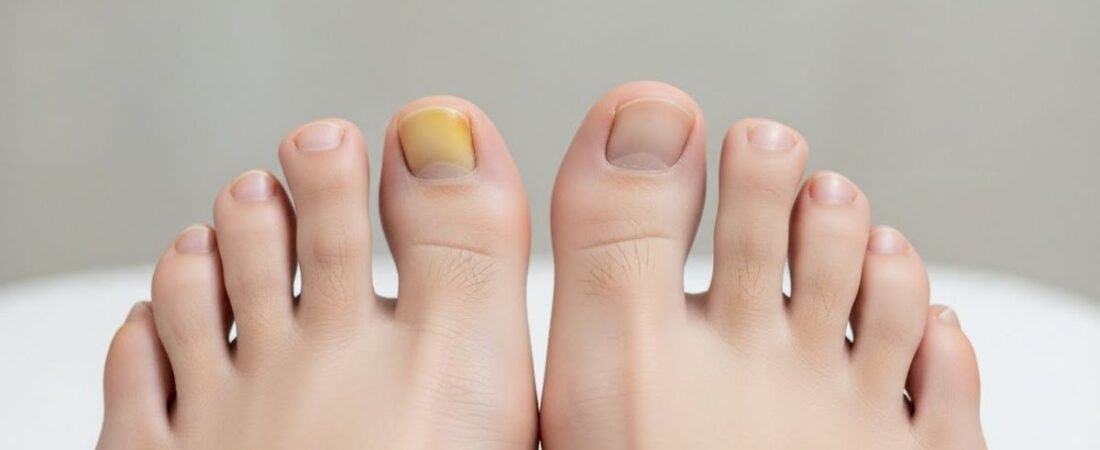
Toenail fungus is often treated as a cosmetic issue — but many people quietly worry about something else: Can I pass this on to someone else?
The short answer is yes, toenail fungus can be contagious under certain conditions. Understanding how it spreads — and how to reduce exposure — is key to protecting both yourself and others.
If you’ve ever wondered whether sharing a shower, walking barefoot at the gym, or even using the same nail tools could spread toenail fungus, you’re not alone. Many people only start asking these questions after symptoms quietly appear.
What Toenail Fungus Is
Toenail fungus, medically known as onychomycosis, is caused by microscopic fungi that feed on keratin — the protein that forms your nails.
According to the American Academy of Dermatology, these fungi thrive in warm, moist environments and can enter through small cracks in the nail or surrounding skin.
Once established, the infection may slowly change nail color, thickness, and texture.
Is Toenail Fungus Contagious?
Yes — toenail fungus can spread from person to person, but it doesn’t spread as easily as a cold or flu.
Transmission usually happens through direct contact with contaminated surfaces, not casual touch.
How Toenail Fungus Spreads
Common ways fungal organisms spread include:
- Walking barefoot in shared showers or locker rooms
- Using contaminated nail clippers or files
- Wearing shoes that trap moisture
- Contact with skin already affected by athlete’s foot
Fungus can survive on damp surfaces for extended periods, making repeated exposure more risky over time.
Common Places Where Transmission Happens
- Gyms and public pools
- Hotel bathrooms
- Nail salons with poor sterilization
- Shared household showers
Why Some People Get It — and Others Don’t
Exposure alone doesn’t always lead to infection. The fungus needs the right conditions to take hold.
Factors like nail trauma, moisture retention, and reduced circulation can weaken the nail’s natural defenses, making fungal growth more likely.
Who Is at Higher Risk?
Certain people are more susceptible to toenail fungus:
- Those with athlete’s foot
- Older adults
- People with diabetes or circulation issues
- Individuals who wear tight, non-breathable footwear
- Anyone frequently exposed to damp environments
If you fall into one or more of these groups, prevention becomes especially important.
How to Protect Yourself From Toenail Fungus
Simple habits can significantly reduce risk:
- Keep feet clean and dry
- Wear shower sandals in public areas
- Disinfect nail tools regularly
- Avoid sharing shoes or socks
- Let nails breathe between polish applications
Early awareness makes prevention much easier.
If you’re unsure whether changes in your nails may indicate an early fungal infection, comparing real examples can help:
👉 What Does Toenail Fungus Look Like? (Pictures & Early Signs)
Traditional Prevention & Treatment Limits
Many people rely on antifungal sprays or creams as a first step. One common frustration with standard topical options is that they may work well on skin — but struggle to penetrate the nail surface itself.
That’s why consistency matters, and why some approaches focus more on nail structure rather than surface treatment alone.
Before choosing a treatment, it may help to understand which approaches are designed for early surface fungus versus more advanced nail thickening.
Comparing Treatment Approaches
There are several approaches people explore:
- Antifungal creams for surrounding skin
- Medicated nail lacquers
- Prescription oral antifungals
- Oil-based formulations designed for nail penetration
Each option varies in intensity, commitment, and suitability depending on severity.
Some focus only on surface treatment, while others are designed to work with the nail’s structure itself.
If you’re comparing approaches, this detailed breakdown may help you avoid trial-and-error:
👉 Read the Kerassentials Review: Does It Really Work for Toenail Fungus?
Comparing Treatment Options: What Should You Consider?
If you’re dealing with early-stage fungal changes, addressing them sooner rather than later may help prevent deeper nail involvement.
Choosing an approach often comes down to how well it aligns with nail biology, daily routines, and prevention goals.
To see how one of the most discussed oil-based formulations compares to traditional OTC options, read the full 2026 analysis here:
👉 Read the full review
FAQs
Q: Can toenail fungus spread through bedsheets or towels?
A: It’s possible if items remain damp and shared, especially in humid environments.
Q: Is toenail fungus contagious between family members?
A: It can spread through shared showers, floors, or nail tools.
Q: Can nail polish increase the risk of spreading fungus?
A: Polish may trap moisture, which can support fungal persistence if infection is already present.
Reviewed by Laura Collins
Editor & Lead Content Researcher at Nail Health Guide
Laura Collins reviews nail health content using a research-based approach focused on clarity, accuracy, and real-world relevance.
Learn more about Laura Collins