Toenail changes are common, but they are often misunderstood. Discoloration, thickening, brittleness, or surface irregularities do not always indicate an infection. In many cases, these changes are caused by everyday factors such as pressure, aging, cosmetic treatments, or minor injuries.
This guide helps explain the most common toenail problems, what different nail changes may mean, and how to tell when symptoms are — or are not — likely related to a fungal infection.
Why Toenail Problems Are Often Misunderstood
Toenails can change appearance for many reasons, not all of them related to disease. Color changes, thickening, or texture issues may result from trauma, repeated pressure, circulation changes, or normal aging.
Because many nail conditions look similar at first glance, it’s common to assume that any abnormal nail is caused by fungus. This misunderstanding often leads to unnecessary treatments or delays in addressing the real cause of the problem.
Fungal vs Non-Fungal Toenail Conditions
Several common toenail conditions closely resemble fungal infections but require different approaches.
Examples include:
- Nail psoriasis
- Repeated micro-trauma from footwear
- Pressure-related nail thickening
- Temporary nail damage after injury
Understanding these differences can help prevent misdiagnosis and reduce unnecessary antifungal treatment.
Related guides:
- Toenail Fungus vs Nail Psoriasis
- Toenail Fungus vs Trauma Nail Damage
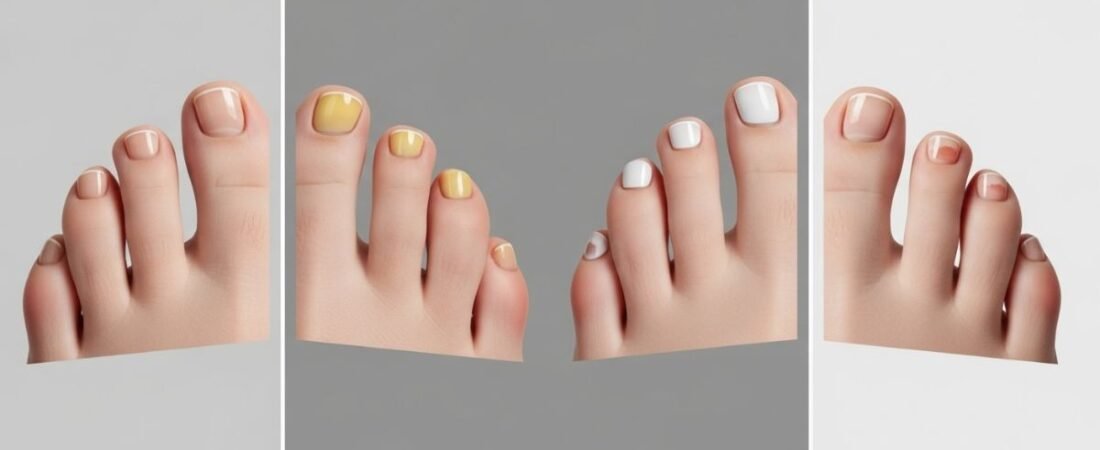
White, Yellow, and Brittle Toenails: What They Can Mean
Changes in toenail color or texture often raise concern, but color alone is not enough to identify the cause.
- White or chalky nails may result from surface dehydration, residue from nail products, or minor surface damage.
- Yellow nails can occur with aging, repeated polish use, smoking, or fungal infection.
- Brittle or peeling nails may reflect dryness, nutritional factors, or repeated mechanical stress.
Because these signs overlap across conditions, additional context — such as progression and duration — is important.
Related guides:
- White Chalky Toenails
- What Does Early Toenail Fungus Look Like
Nail Changes After Pedicures or Acrylic Nails
Cosmetic nail treatments can temporarily affect toenail appearance, even when performed correctly.
Common changes include:
- Surface roughness after acrylic removal
- White patches caused by dehydration
- Nail thinning from repeated filing
In many cases, these changes improve as the nail grows out. However, repeated damage may weaken the nail and, in some situations, create conditions where infections develop later.
Related guides:
- Toenail Fungus After Pedicure
- Toenail Fungus After Acrylic Nails
When a Toenail Problem Is Not Fungus
Not all nail changes signal infection. Non-fungal causes may include:
- Normal age-related nail thickening
- Reduced circulation in the feet
- Repeated pressure from tight shoes
- Minor injuries that went unnoticed
These issues often affect nail growth and appearance without spreading or worsening in the same pattern typical of fungal infections.
Related guide:
- Toenail Fungus and Aging
Toenail Problems Affecting Only One Nail
When a single toenail changes while others remain normal, localized causes are often involved.
Common explanations include:
- Trauma or pressure to one toe
- Footwear-related stress
- Isolated nail injuries
Fungal infections can begin in one nail, but isolated changes that do not spread or progress may follow a different course.
Related guides:
- Toenail Fungus in One Nail Only
- Is Toenail Fungus Contagious
When to Suspect a Fungal Infection
A fungal infection becomes more likely when nail changes:
- Persist for months without improvement
- Gradually spread or worsen over time
- Involve thickening combined with discoloration
- Do not improve as the nail grows out
When nail changes follow this pattern, learning more about toenail fungus causes, symptoms, stages, and treatment options may help clarify next steps.
In-depth guide:
- Toenail Fungus: Causes, Symptoms, Stages & Treatment
Conclusion
Toenail changes are common and not always a sign of infection. Understanding the difference between fungal and non-fungal nail problems can help prevent unnecessary treatments and guide more informed decisions.
When nail changes persist, worsen, or follow patterns typical of infection, further evaluation may be appropriate. Knowing when a toenail problem is — and is not — likely caused by fungus is an important first step toward proper care.
Related Guides and In-Depth Resources
- Toenail Fungus vs Nail Psoriasis
- Toenail Fungus vs Trauma Nail Damage
- White Chalky Toenails
- What Does Early Toenail Fungus Look Like
- Toenail Fungus After Pedicure
- Toenail Fungus After Acrylic Nails
- Toenail Fungus and Aging
- Toenail Fungus in One Nail Only
- Is Toenail Fungus Contagious
Reviewed by Laura Collins
Editor & Lead Content Researcher at Nail Health Guide
Laura Collins reviews nail health content using a research-based approach focused on clarity, accuracy, and real-world relevance.
Learn more about Laura Collins